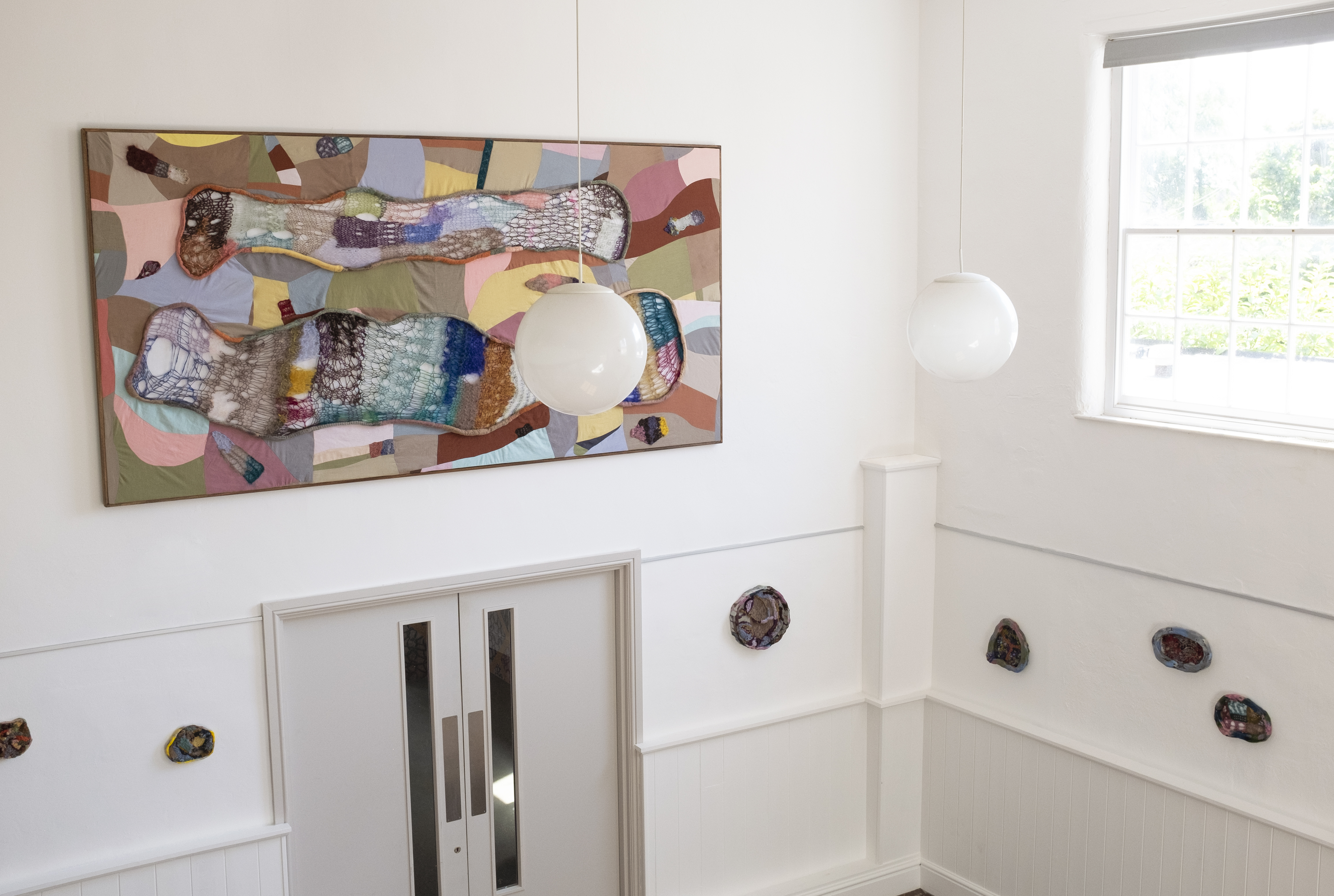
Fibril Landings Framework Knitters Museum Chapelspace Gallery, Ruddington, Nottingham, June 2023

Above from left, The house protects, My place is here, Holding history in my hands. Photography by Harry Gammer Flitcroft.
Text throughout by Josh Mcloughlin & the artist: This show explores lace, knitting, framing, the inherited, manufacturing and textiles in the home. The artist is particularly interested in the moment in history when the lace industry replaced traditional framework knitting, especially in the East Midlands, where many knitting frames were altered and repurposed for lacemaking. The show explores the conflict between knitting, traditionally known for its warmth, comfort and functionality, and lace, a decorative adornment or embellishment.
In her previous work, the artist has collected materials from workplaces and homes, and explored the sentimentality and emotion preserved in leftover items. For this solo exhibition, she was inspired by the history preserved at the Framework Knitters’ Museum, how lacemaking and framework knitting were nearly lost to history, and what these nostalgic forms mean to different generations. This led her to make site-specific works responding to and resemble aspects of the museum, from the processes of knitting, wool-spinning and quilting to the interior colours of the knitters’ cottages.

My place is here, glazed ceramic, homespun wool, embroidery thread, glue, nails


Hold you in this world, glazed ceramic, mixed wool, tufting cloth, dye, ink

Night water & To not have to, glazed ceramic, homespun wool, mixed wool, embroidery thread, nails
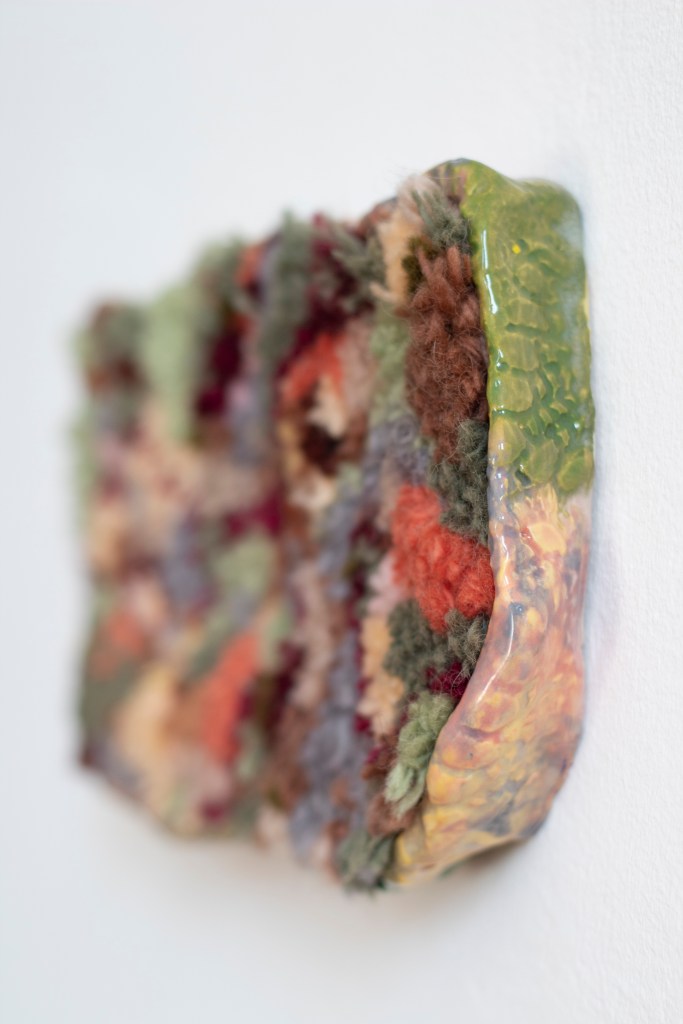
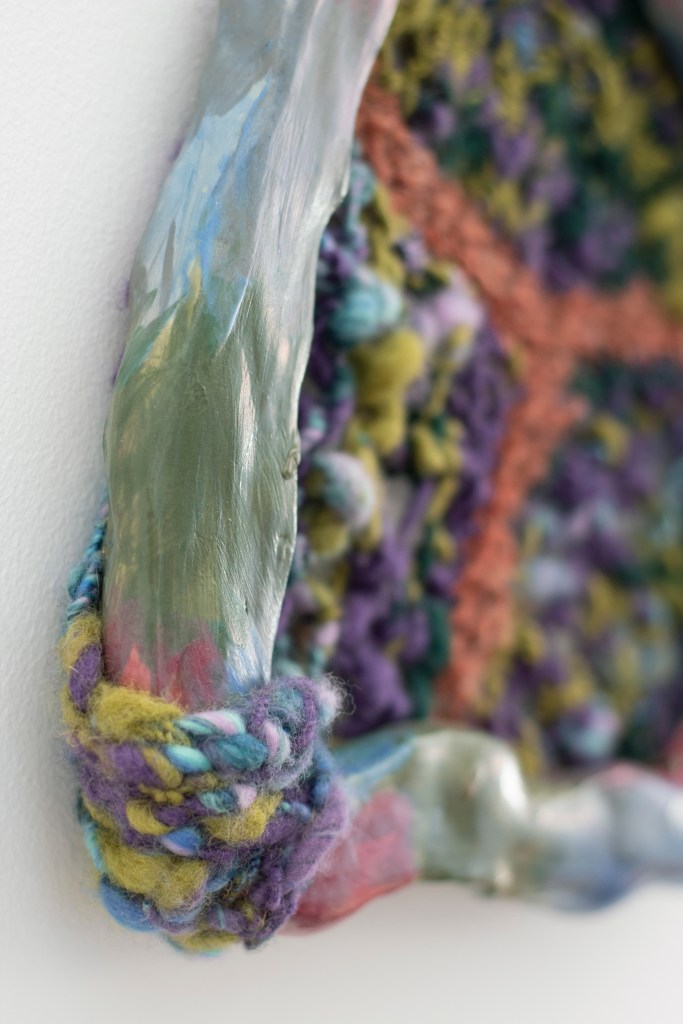
The wall-hung ceramic and wool works use wool handspun on a traditional Ashford wheel by the artist and knitting by her mother. ‘Fibril’, as used in the title of the show, has several meanings: in biology, it refers to a subdivision of muscle fibre; in textiles, a fibril is a microscopic element of a fibre. The artist was interested in the early phases of the production of knitting and framing (like a fibril to a fibre) by hand-making works with raw fibrous wool and blocks of clay. Some frames contain imprints of Brenda’s lace and knitting by the artist’s mother, bringing together three generations of women working with craft techniques. The glazed works are framed in expressive, painterly gestures, recalling the artist’s early working medium, and form part of her wider exploration of craft and fine art hierarchies and histories, and her search for new contexts.
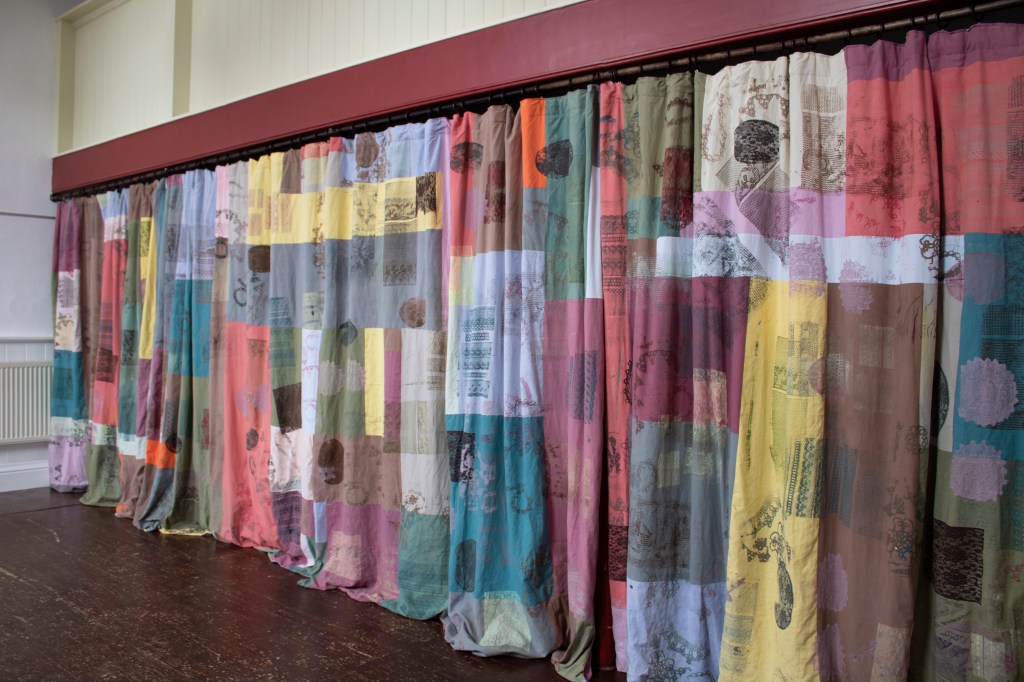
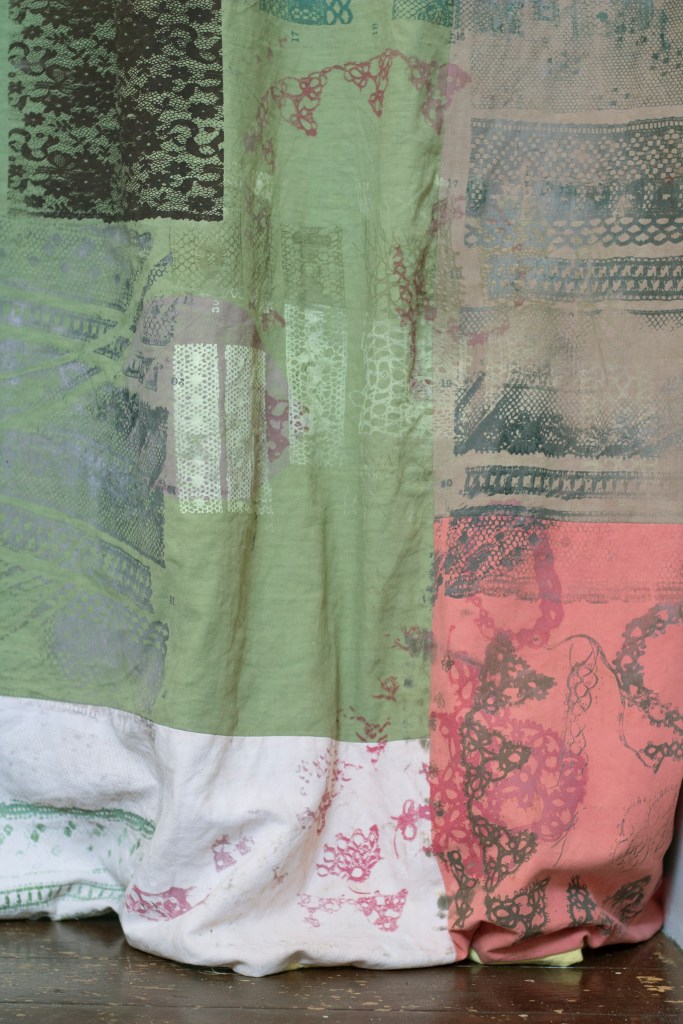

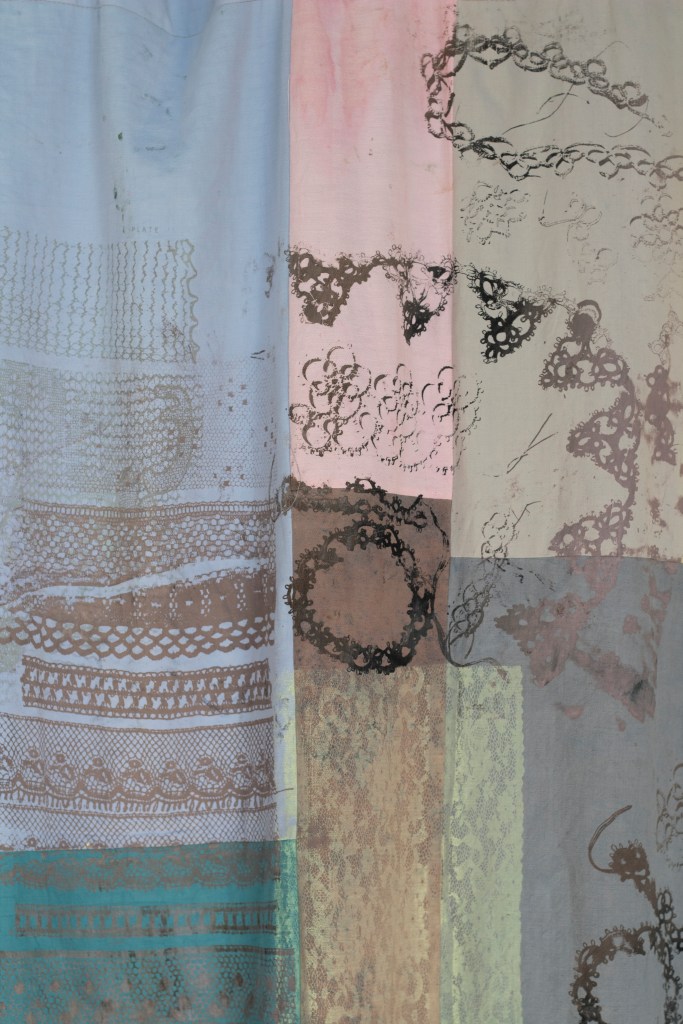


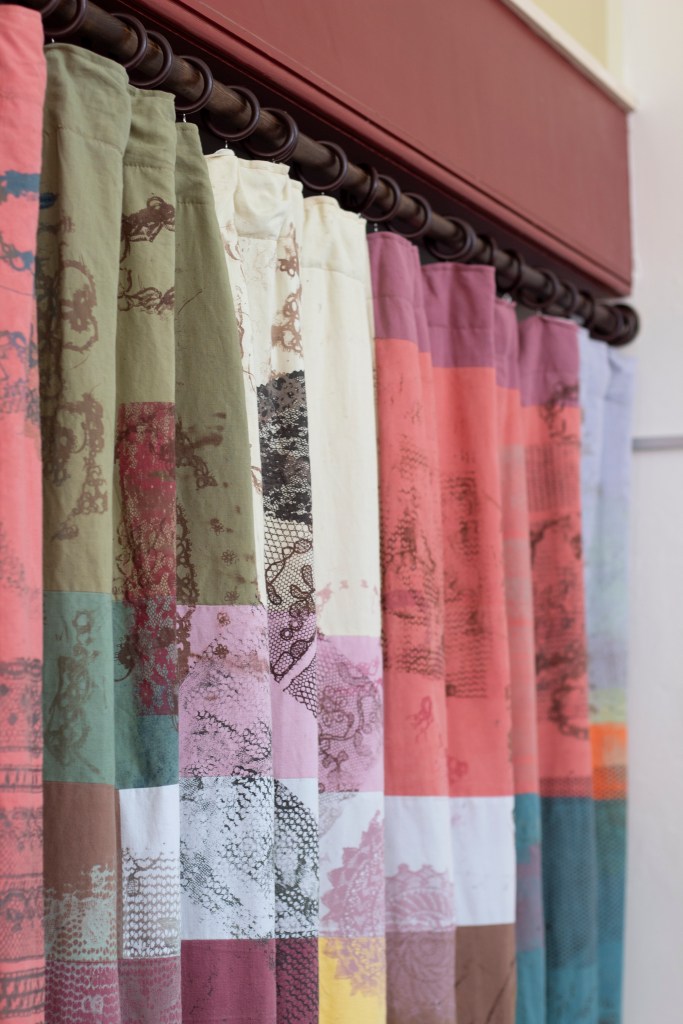
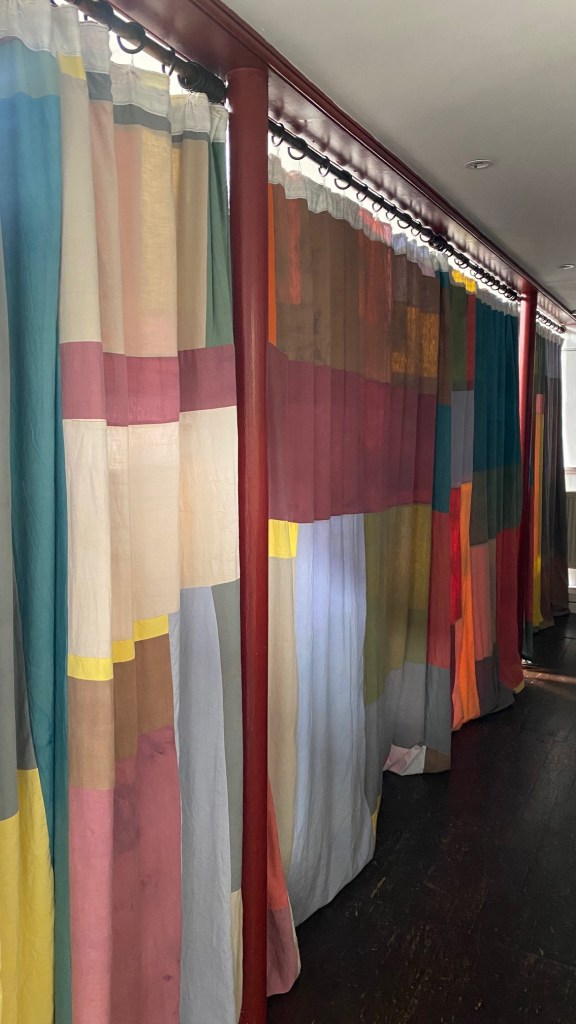


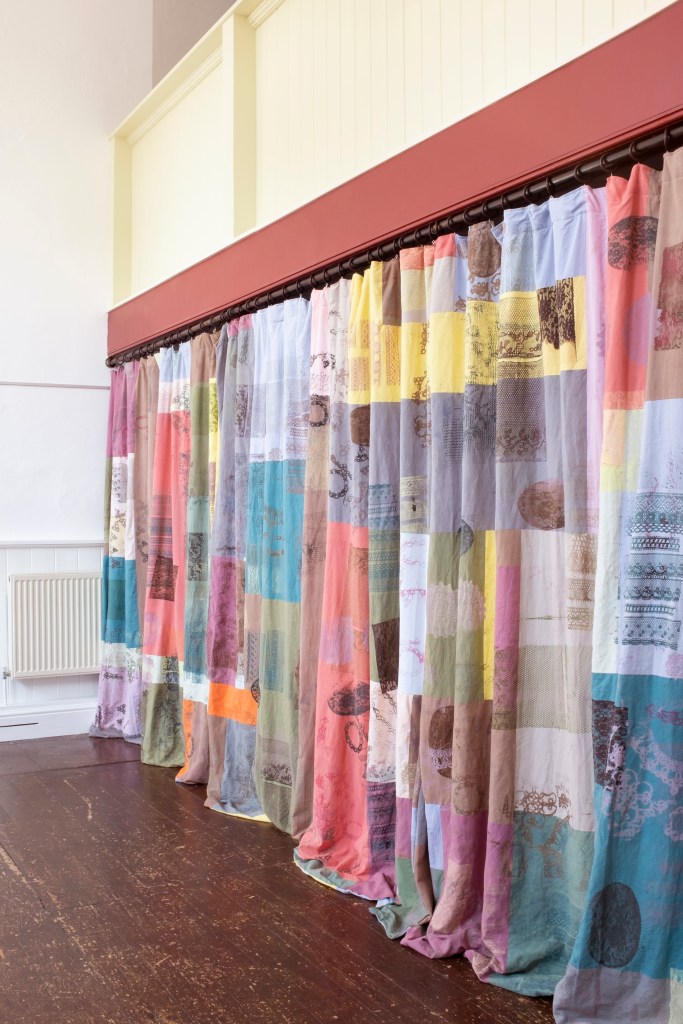
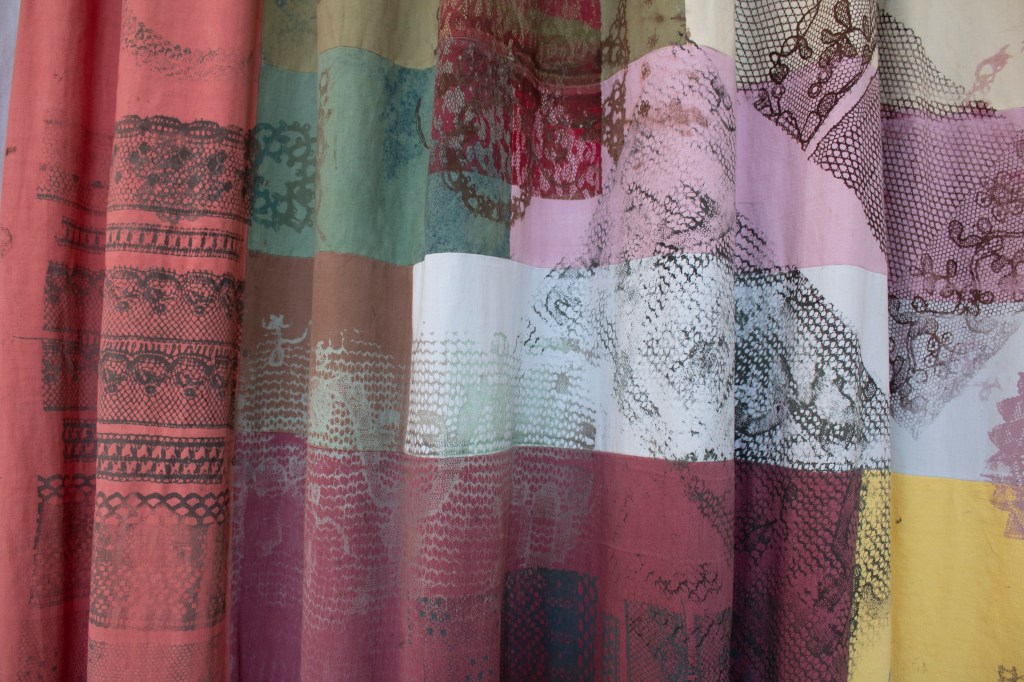
Holding history in my hands, ink, linen, reactive dyes, direct dyes, thread, wood, 6.86m x 2.2m with thanks to Dizzy Ink where this was printed locally to Nottingham
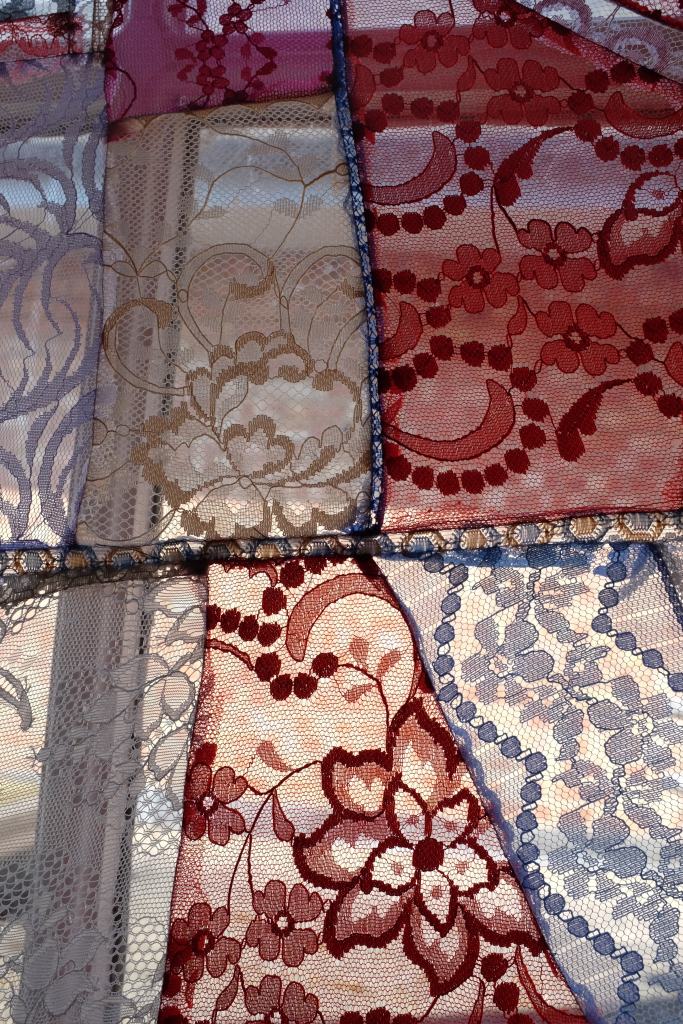
Holding History In My Hands is a patchwork curtain, silkscreen-printed with images of lace from three different contexts: the artist’s late grandma Brenda’s handmade lace (which she knotted and looped on her lap using the ‘tatting’ process), lace doilies that adorned drawers, bedside tables, and windows in Brenda’s home, and plates from William Felkin’s History of the Machine-Wrought Hosiery and Lace Manufactures (1867).
The artist wanted to bring together ‘domestic’ or ‘cottage’ industry and large-scale manufacturing to show the different processes, contexts and histories of lacemaking. Lace was known as ‘the embroidery that hangs in the air’, lace took loops (which were central to knitting) to a new level of complexity and ornamentation. By printing the imagery of lace again, the artist is trying to preserve something delicate and fragile. The ghostly images of the lace disappearing and reappearing trace a lost history that has disappeared from people’s homes. Just as lace was traditionally associated with re-use, reproduction and changing fashions, the prints reproduce the lace and re-use it in a different context. In lace, transparency interplays with opacity, just as printing depends on the opacity of the image.


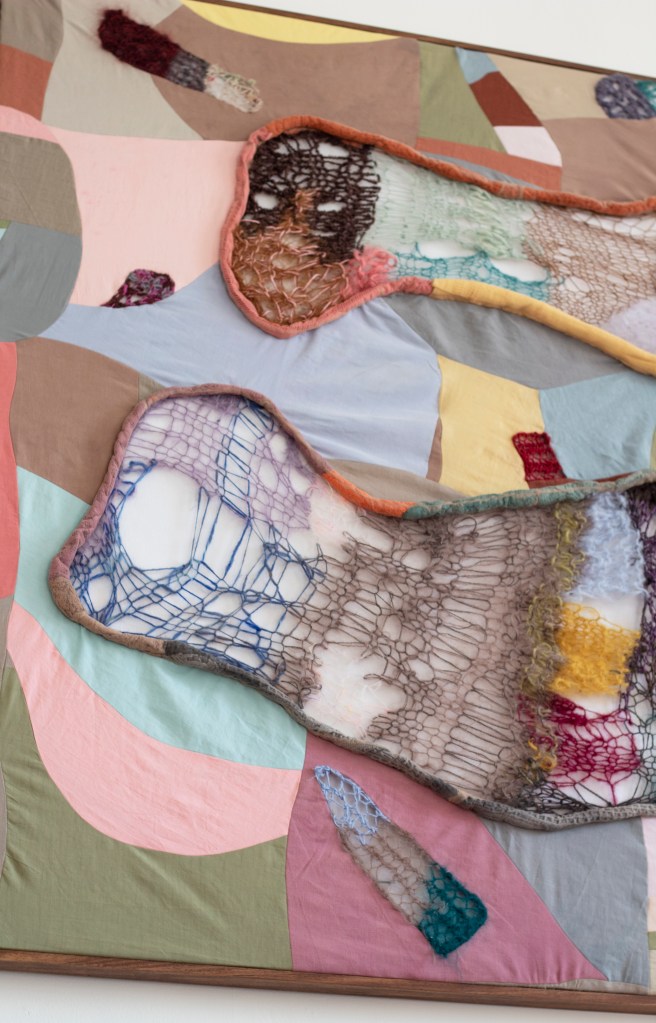

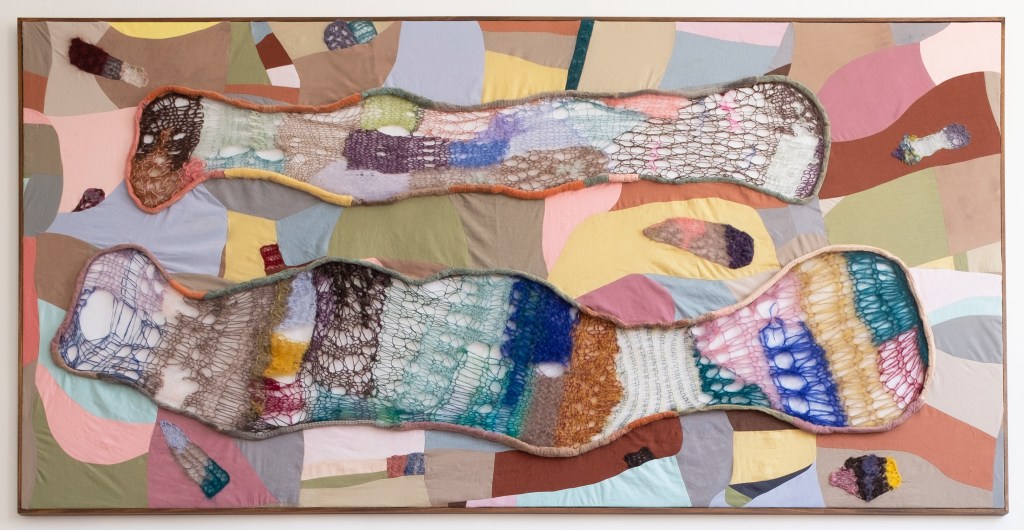
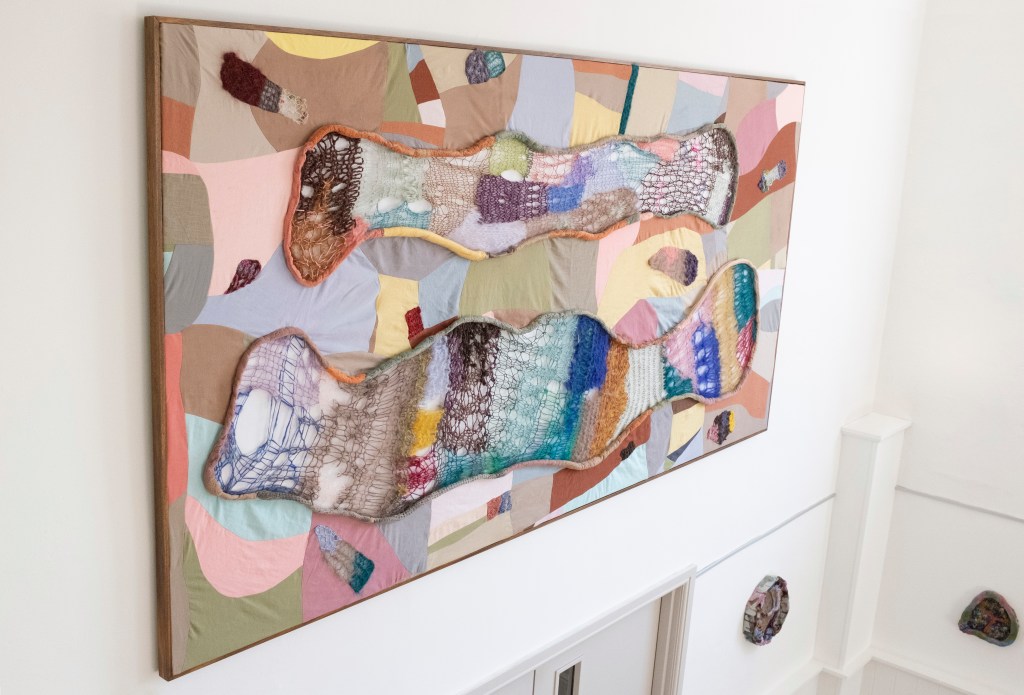

Growing pains, linen, thread, reactive dyes, direct dyes, mixed wool, lace, sheer fabric, wood 2.85m x 1.45m
In Growing Pains, a combination of wool, lace, and dyed linens is patchworked together and framed, using different materials to explore lace, framing and knitting. The lace has been stuffed into translucent sausage-like shapes to frame the knitting, which was made by the artist’s mother to the artist’s design. The work is freeform in its approach, using colour, texture and different knit patterns in a compositional, painterly way. The knit is stretched out into two soft, bodily forms with flecks of knitting flying around them in different directions. The title hints at the rapid growth and changes in the framework knitting and lace industries, which parallel the often messy and painful progress of personal growth, both physical and psychological.

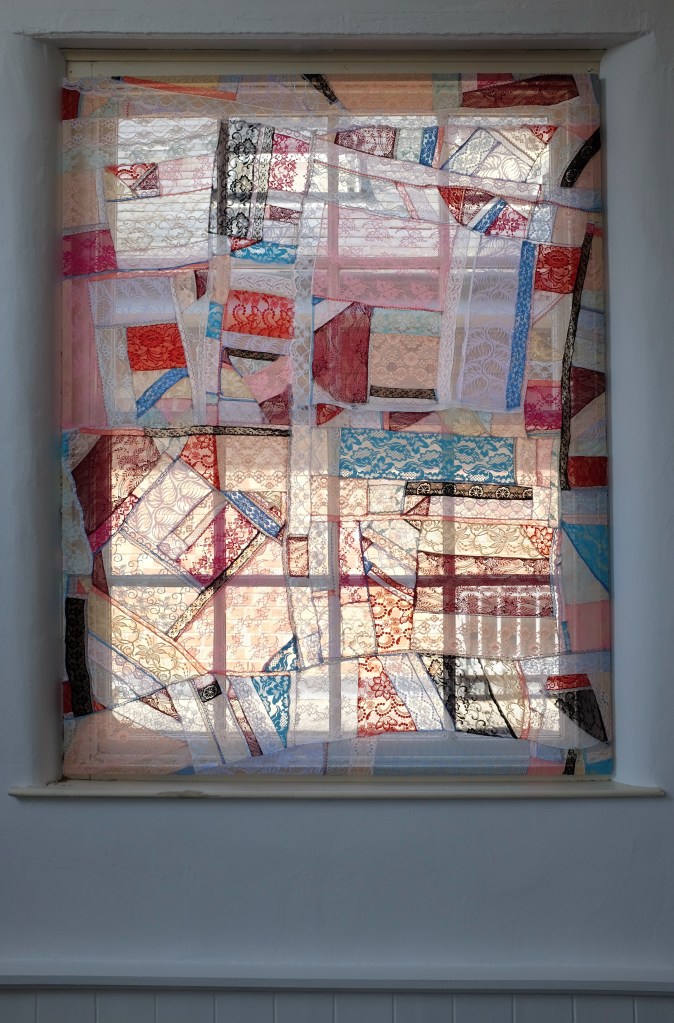
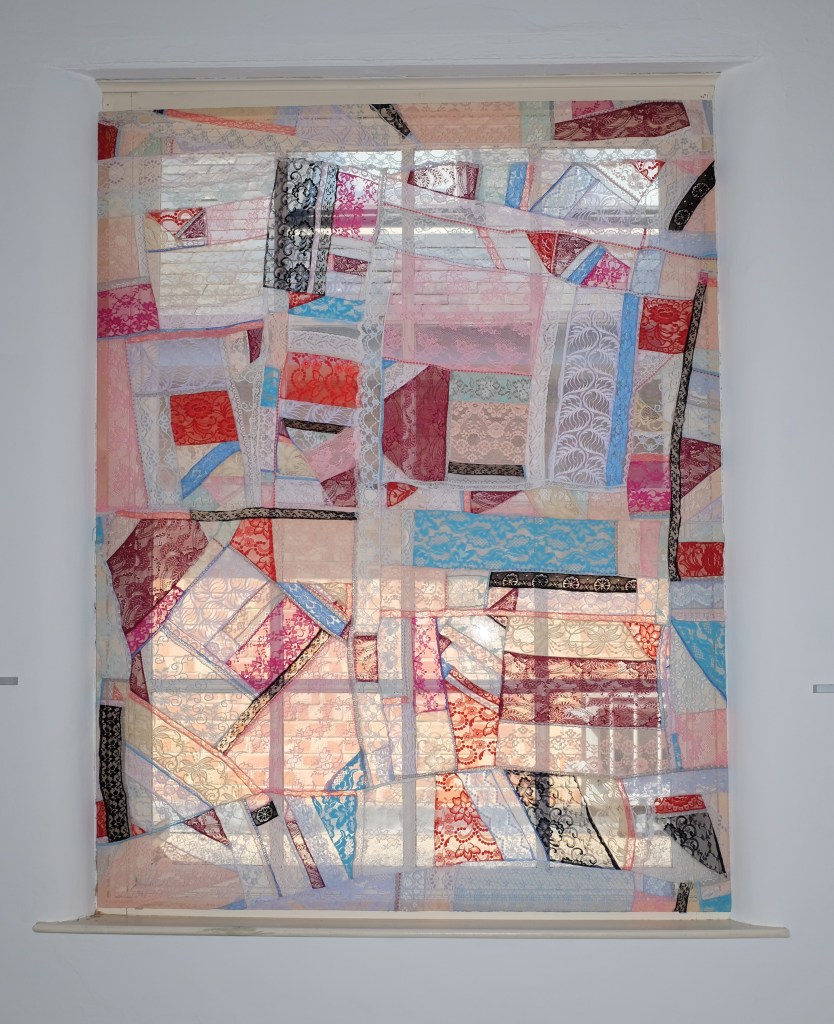
The house protects, lace, thread, wood



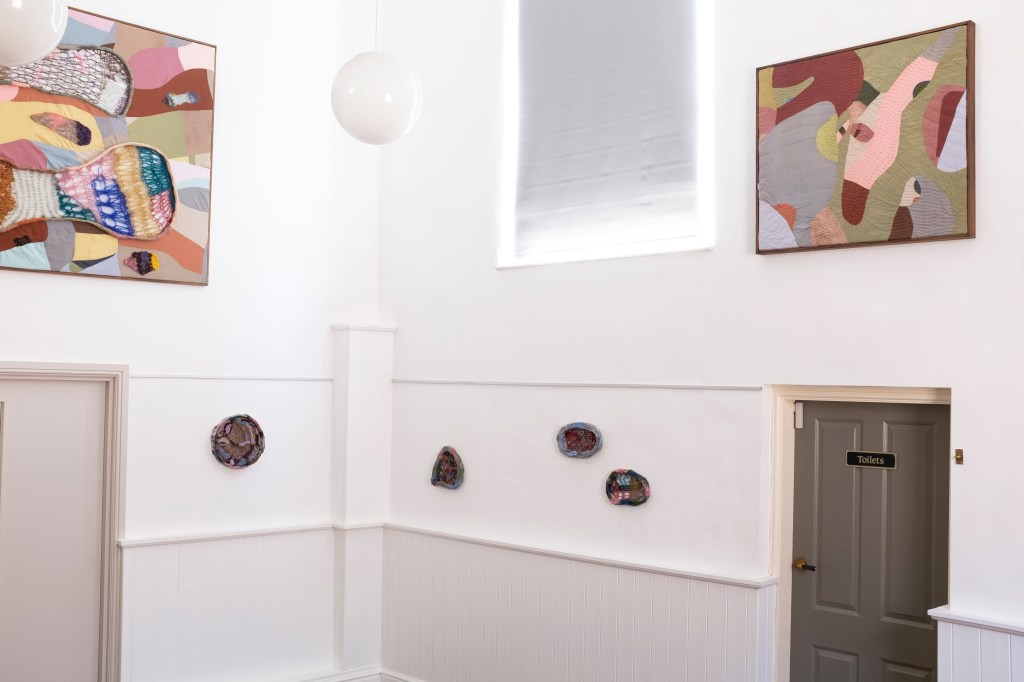
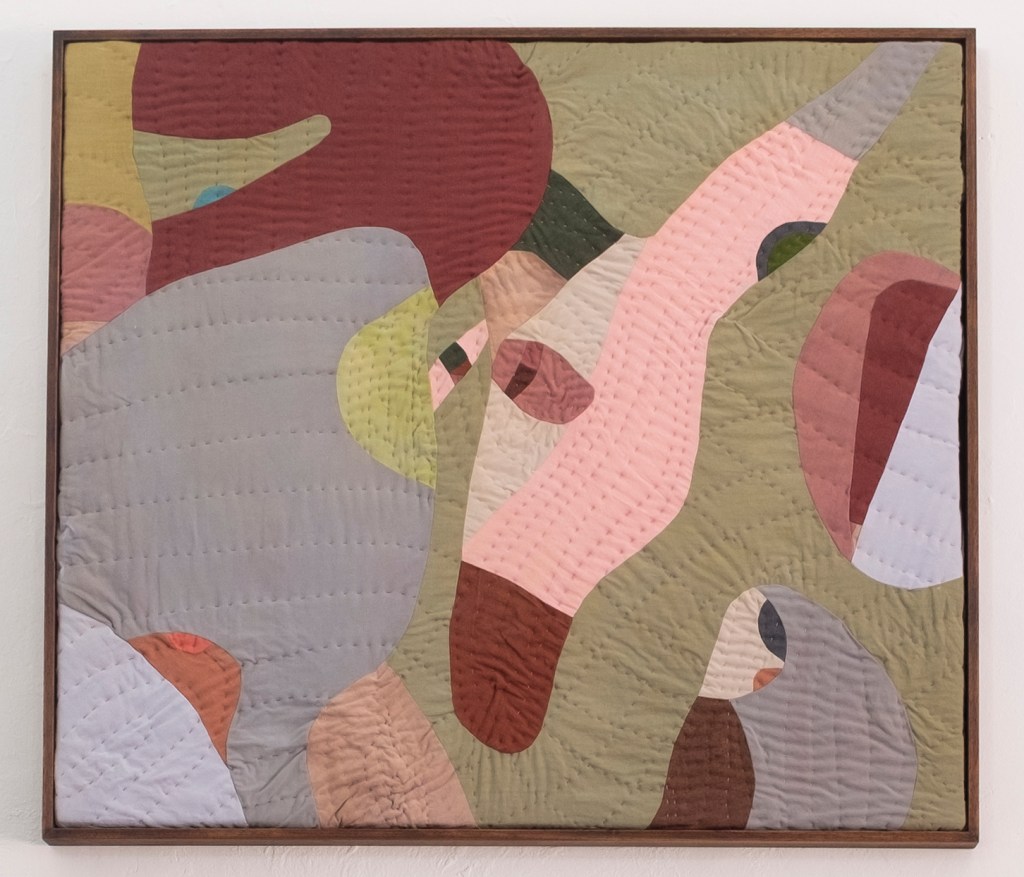
From left Growing pains, Hold you in this world, Holding bay, Night water, To not have to, Being too much
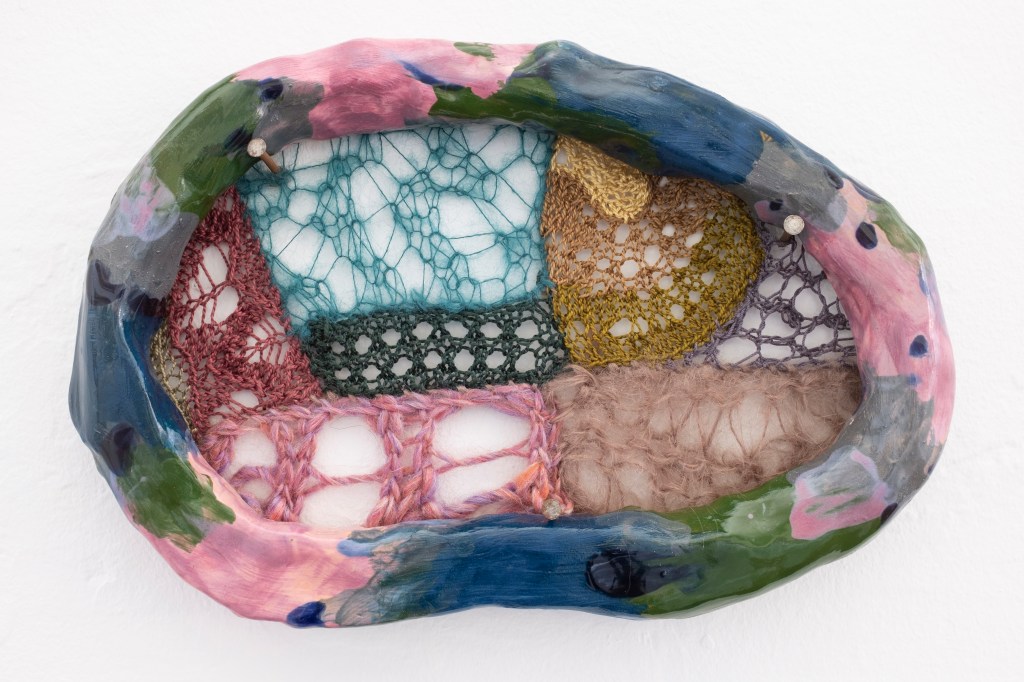
To not have to, glazed ceramic, homespun wool, mixed wool, embroidery thread, glue, nails
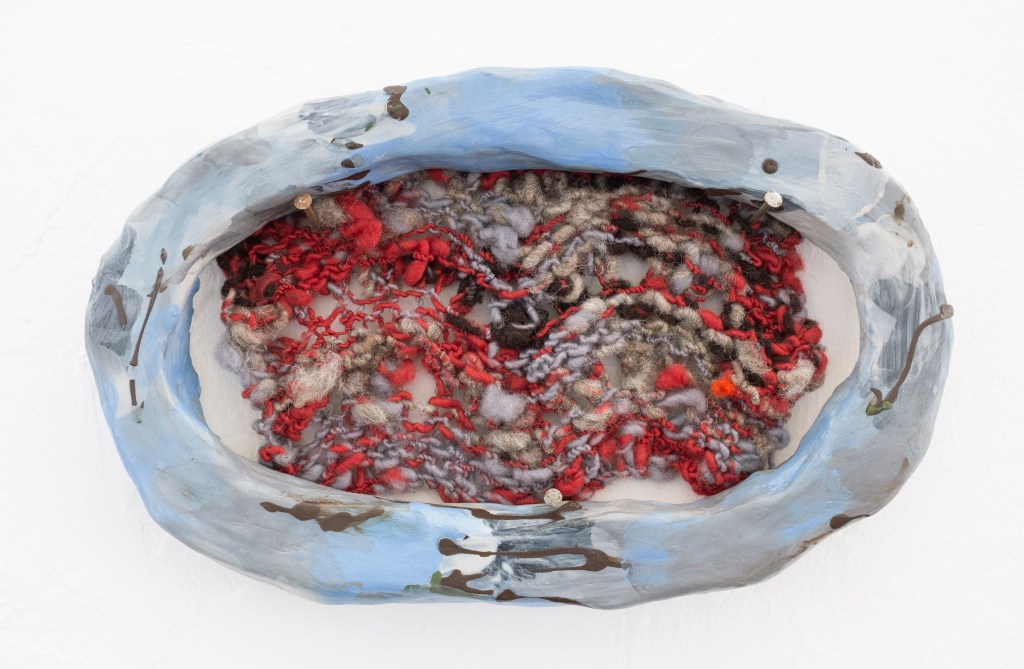
Night water, glazed ceramic, homespun wool, glue, nails


Able to happen, mixed wool, tufting cloth, glazed ceramic, glue, nails

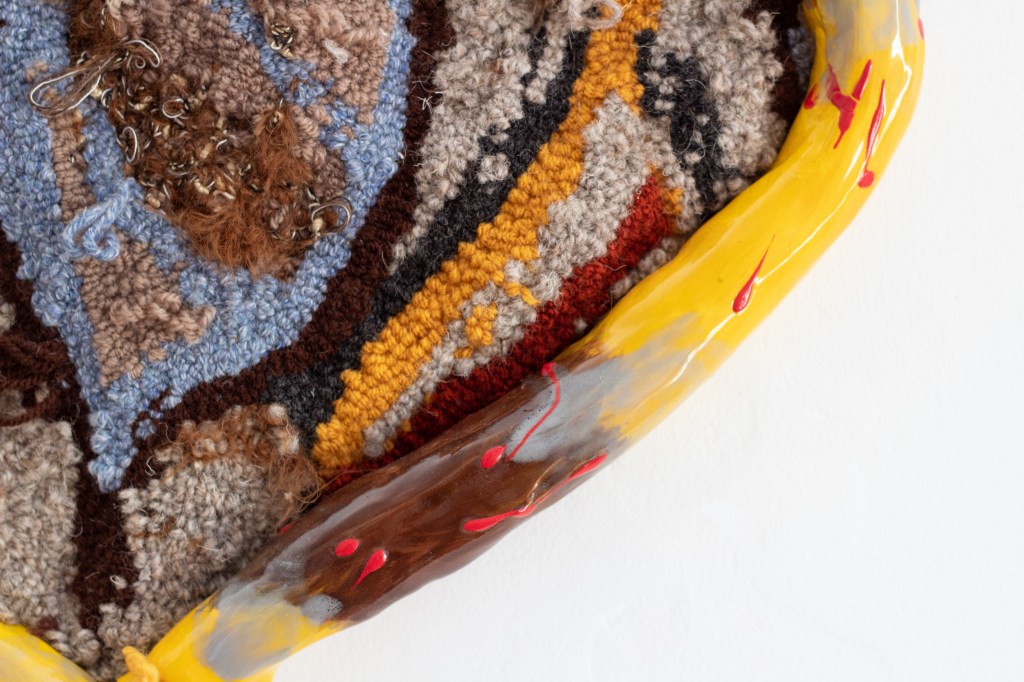


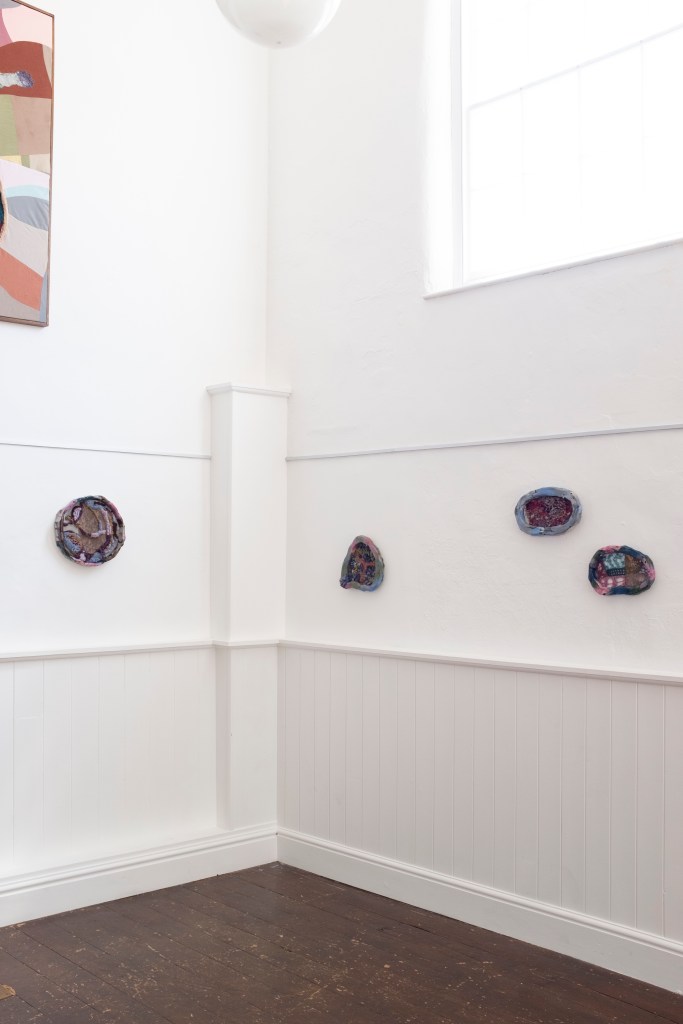

Holding bay glazed ceramic, mixed wool, embroidery thread, glue, nails

Lost lace, mixed wool, tufting cloth, glazed ceramic, glue, nails

That get kept, wool, latch hook cloth, glazed ceramic, glue, nails

My way through, glazed ceramic, homespun wool, linen thread, nails

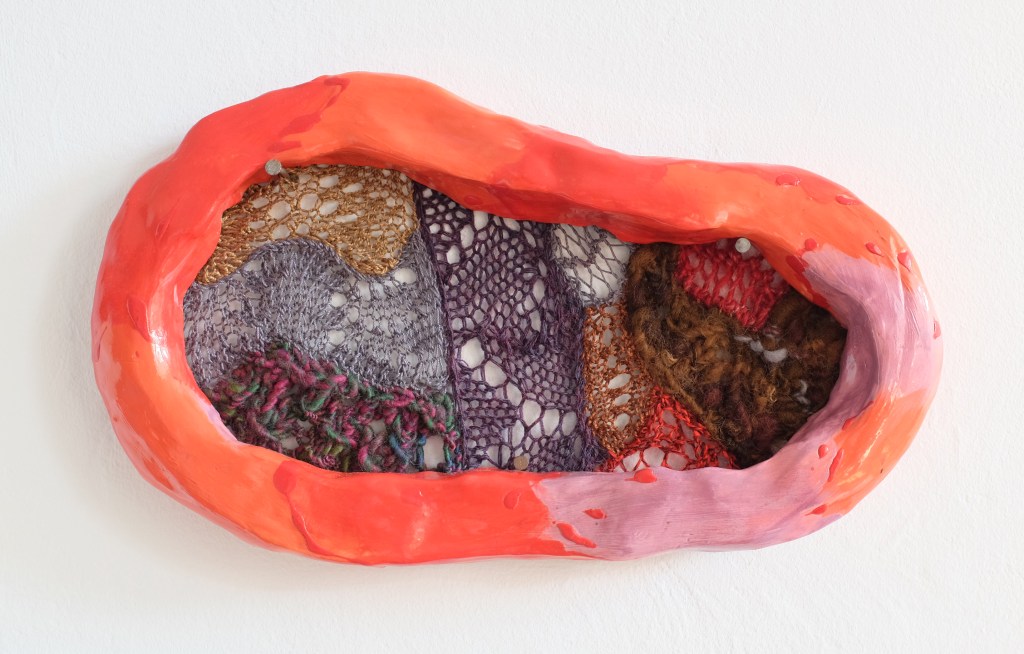
Hold it in my head, glazed ceramic, homespun wool, mixed wool, embroidery thread, glue, nails
Details of works below




 Sophie Giller