Curated by artist Imogen Wetherell, Photos by Noah Da Costa, Cambridge March 2024
Ralph Anderson, Dominic Beattie, Cecilia Charlton, Will Cruickshank, Sophie Giller, Melania Toma, Imogen Wetherell, Anisa Zahedi
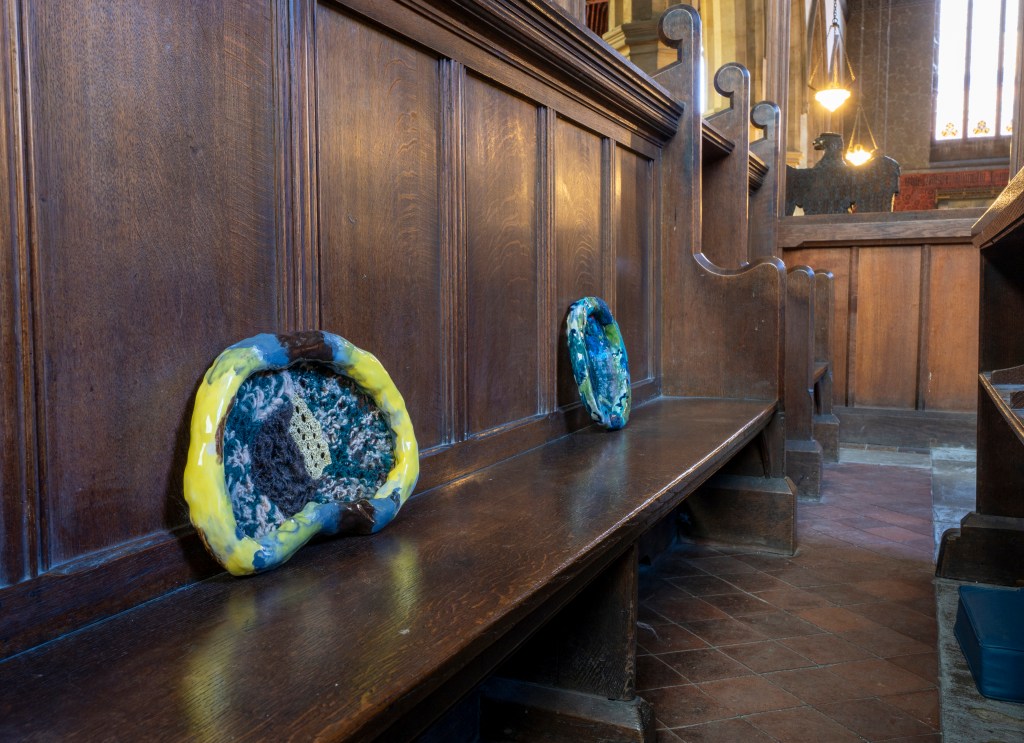
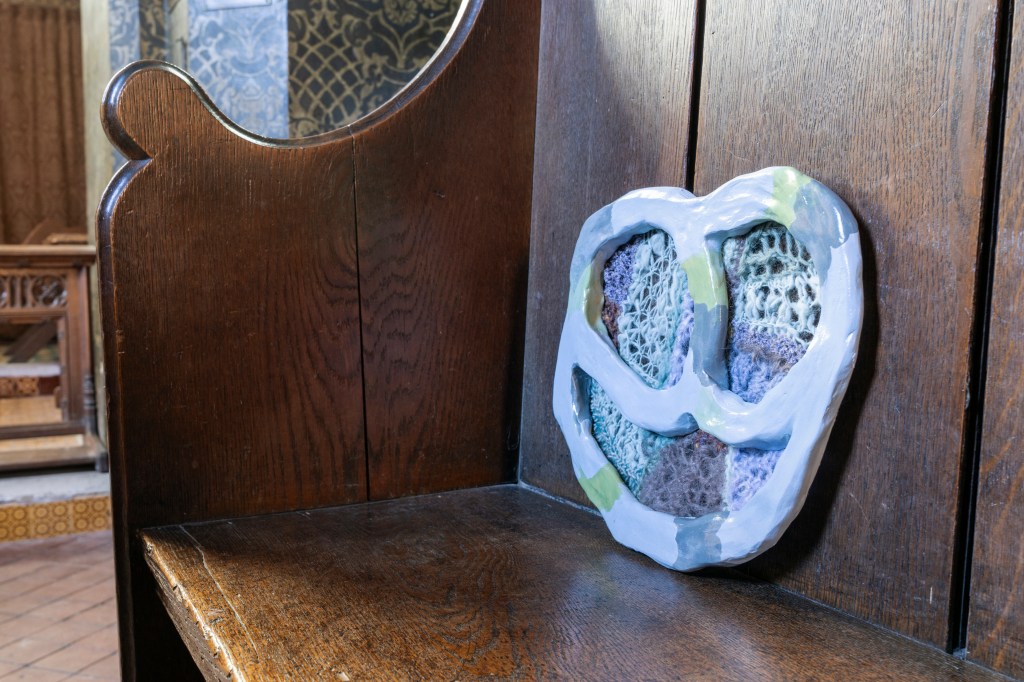
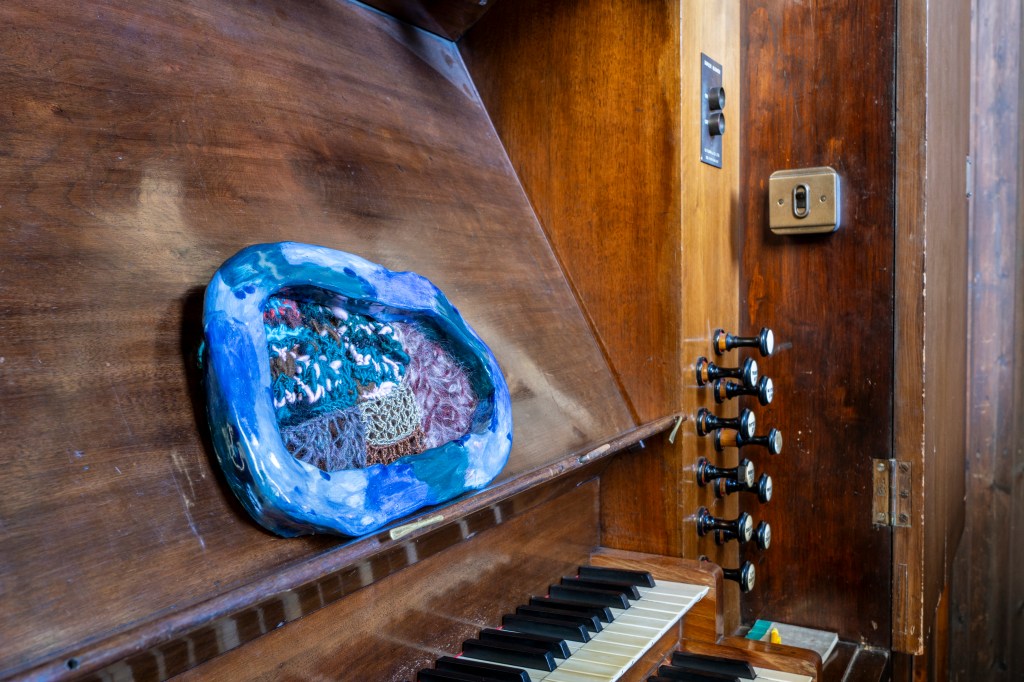
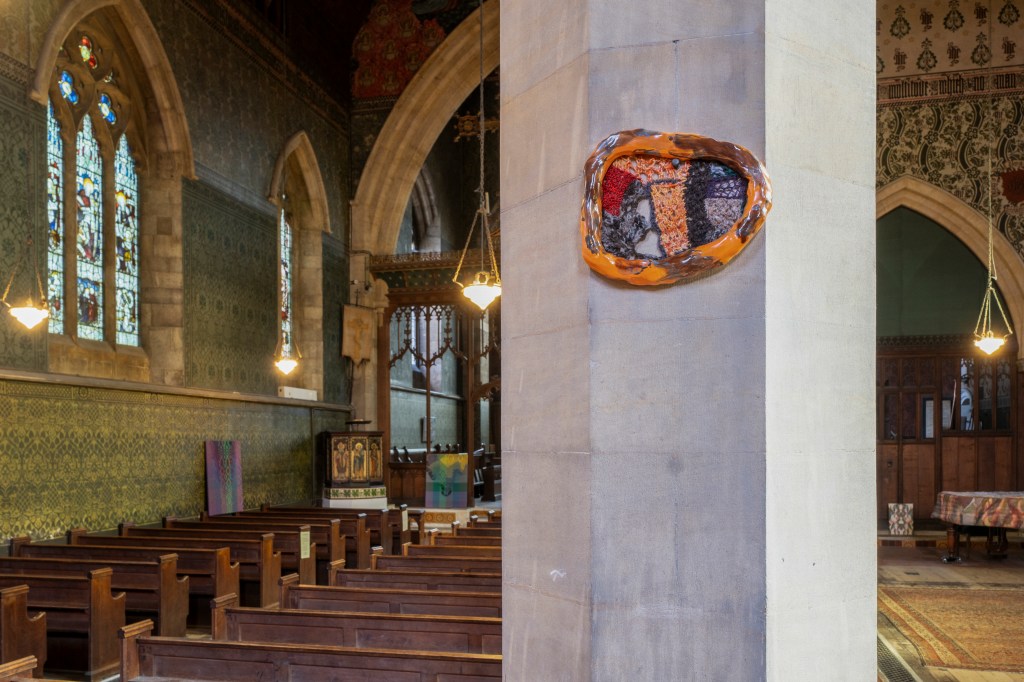
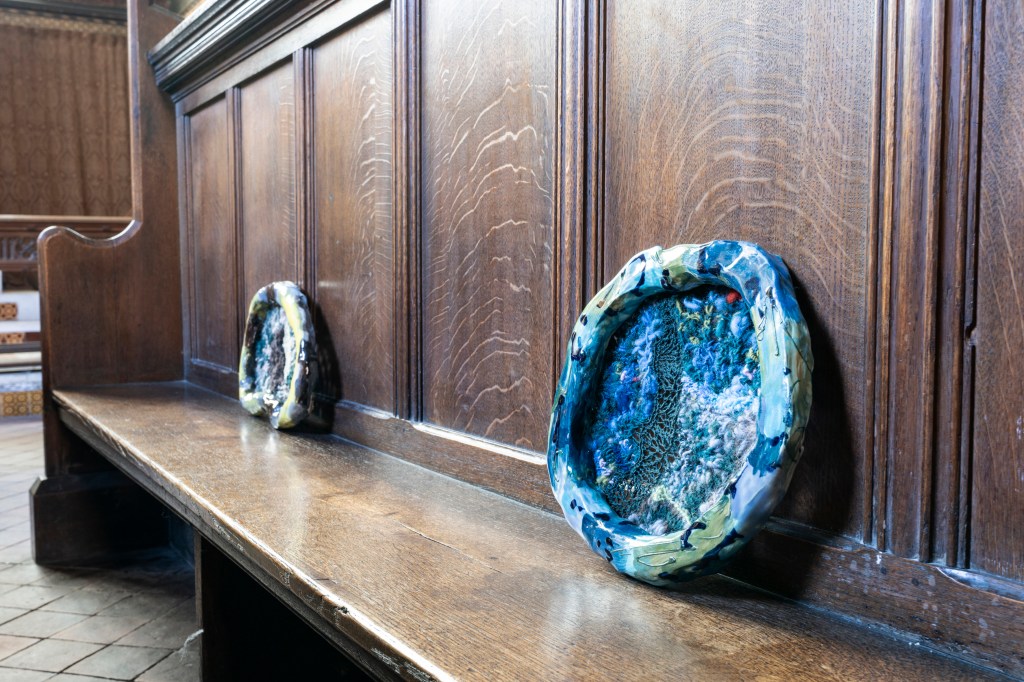
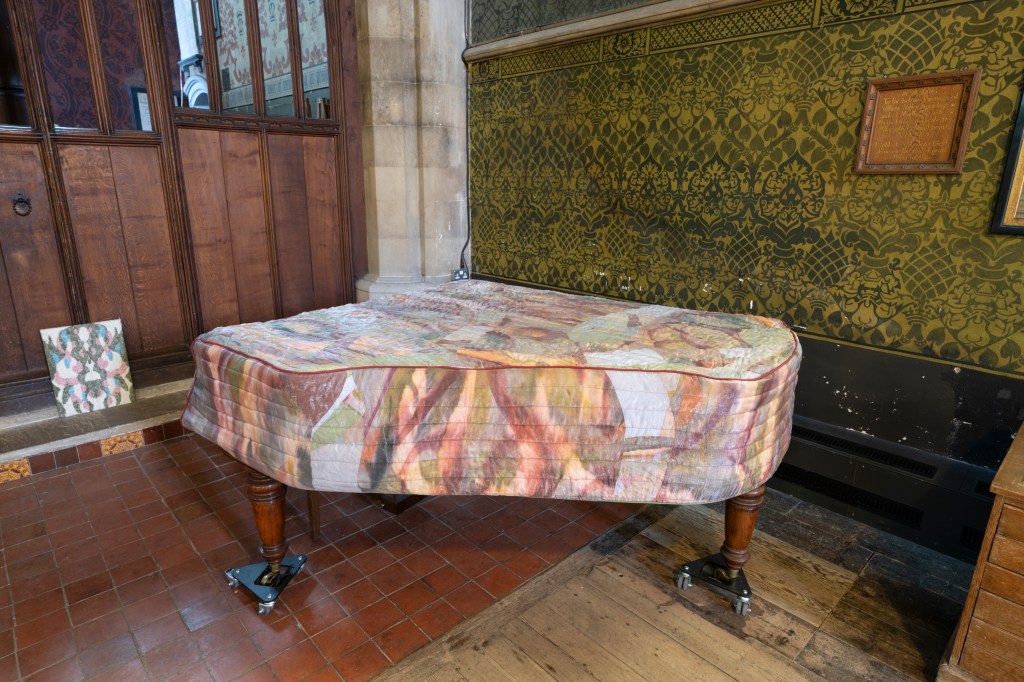
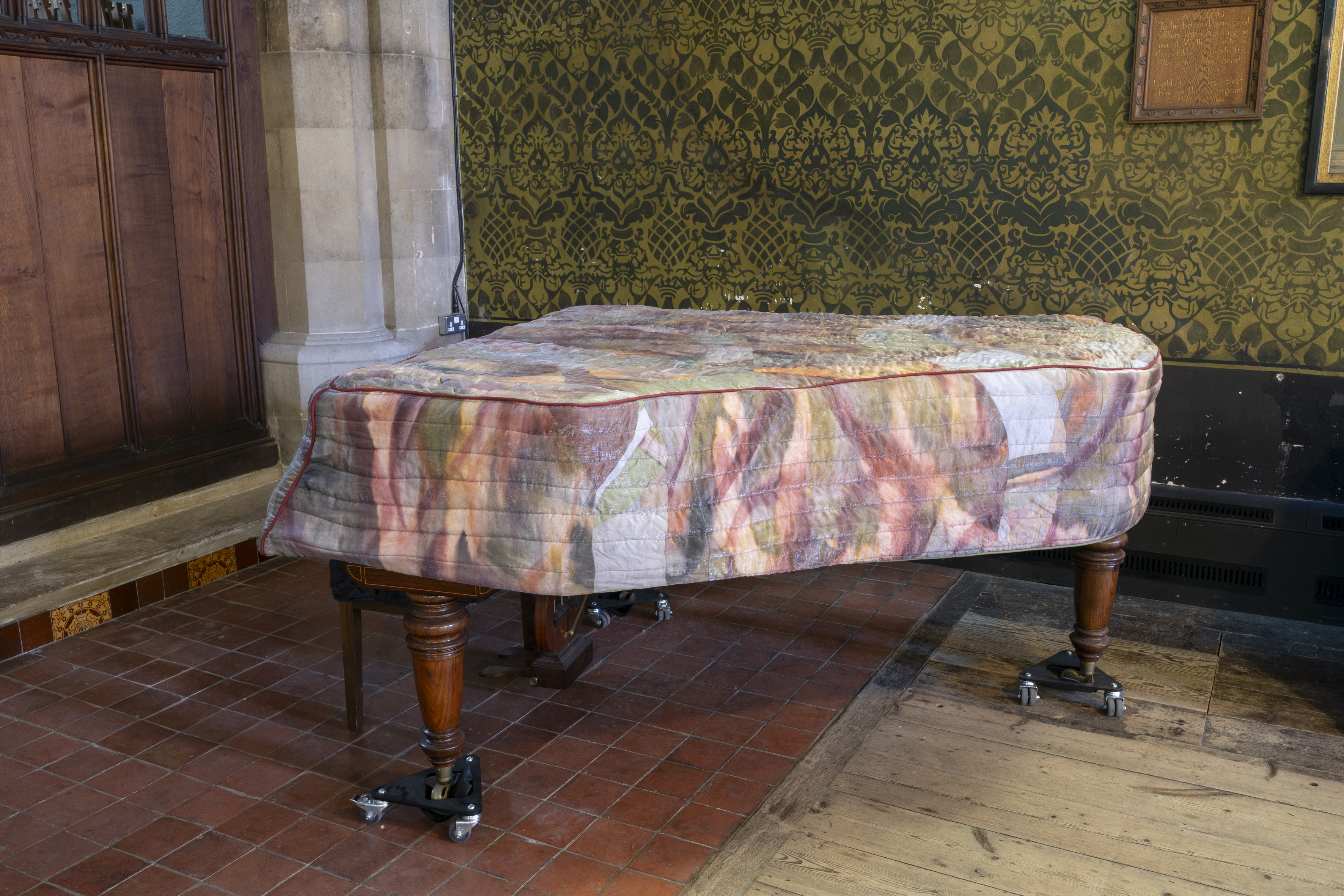
Selection of Ceramic Knit Works & Painted piano cover, dyes, linen, piping, wadding, thread, photos by Noah Da Costa. Work pictured to left in above photo by Will Cruickshank.
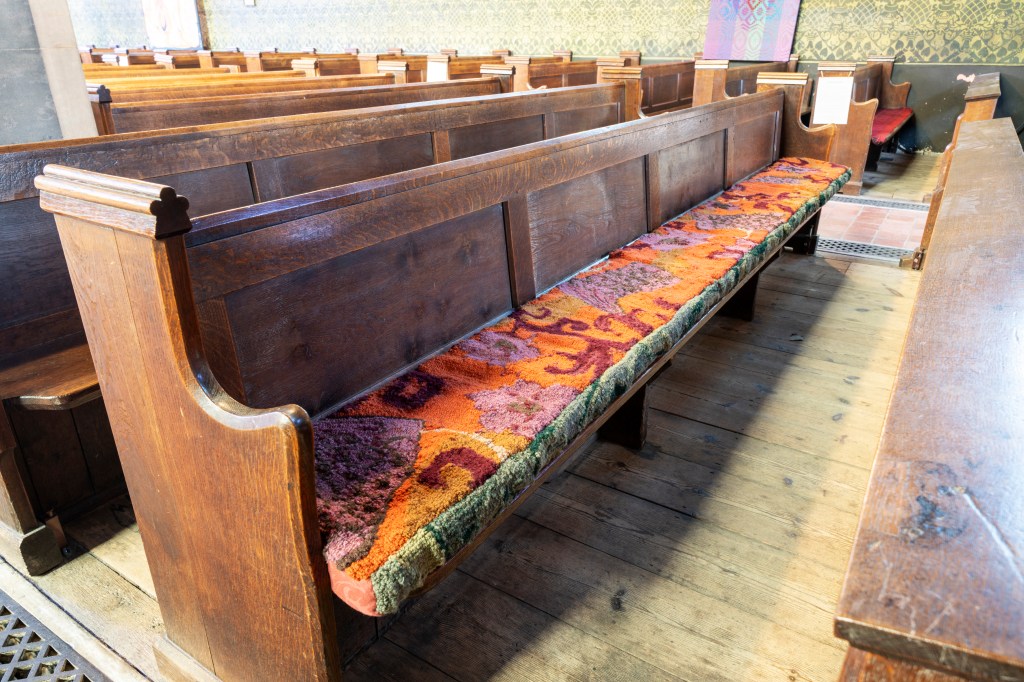
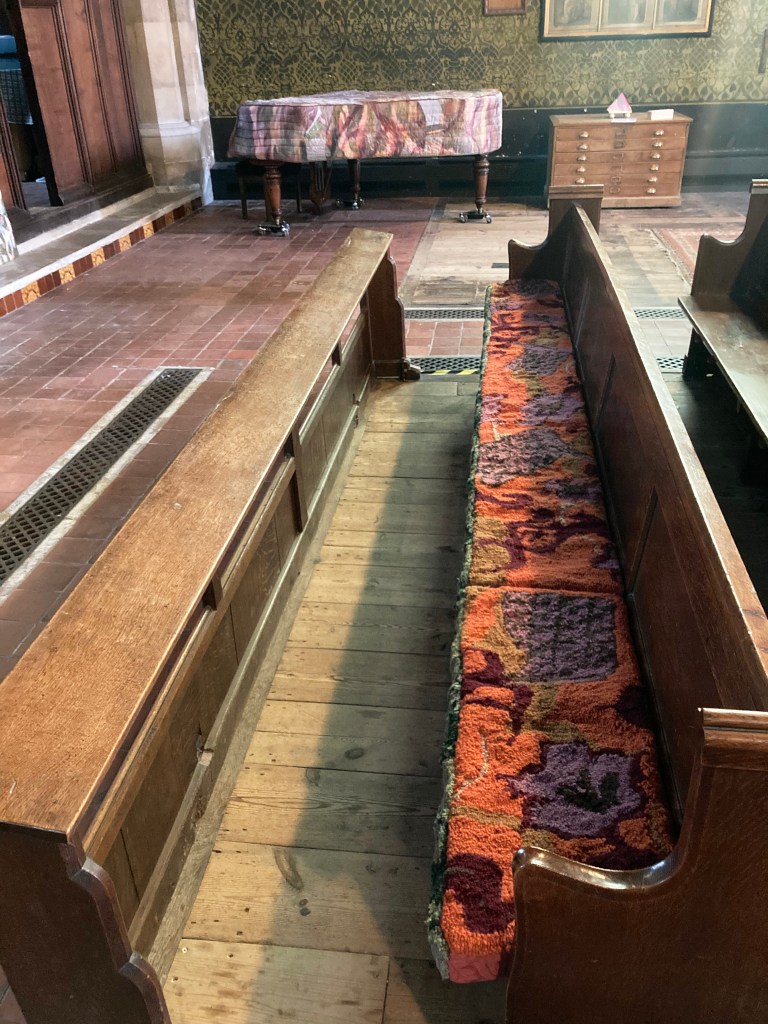
Cycle of well-being, Wool, tufting backing, foam, fabric, glue. Photo by Noah Da Costa.
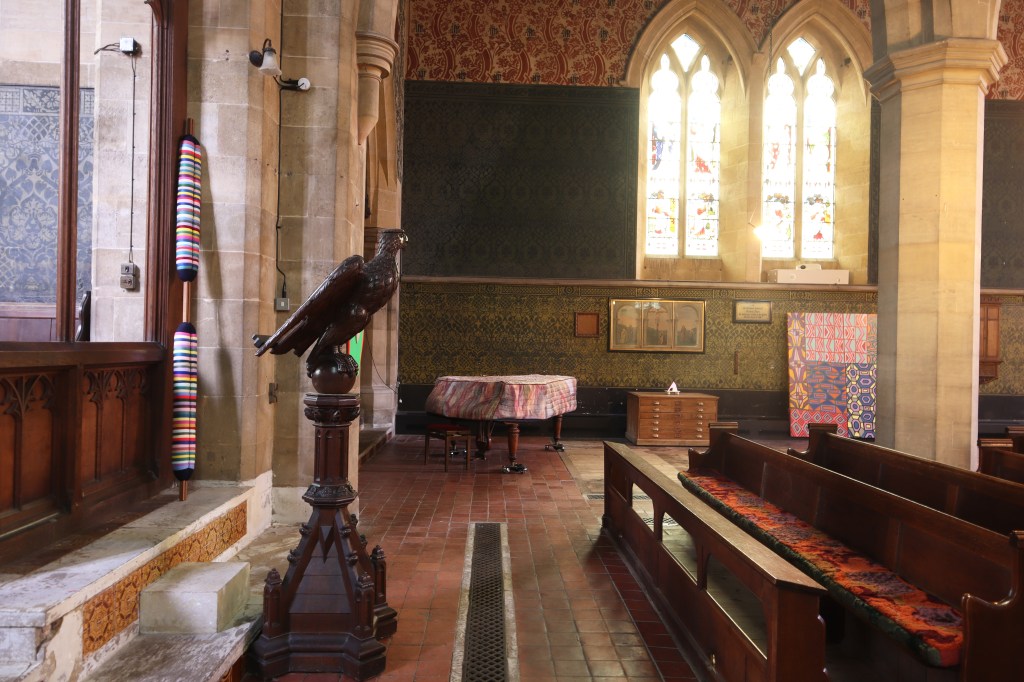
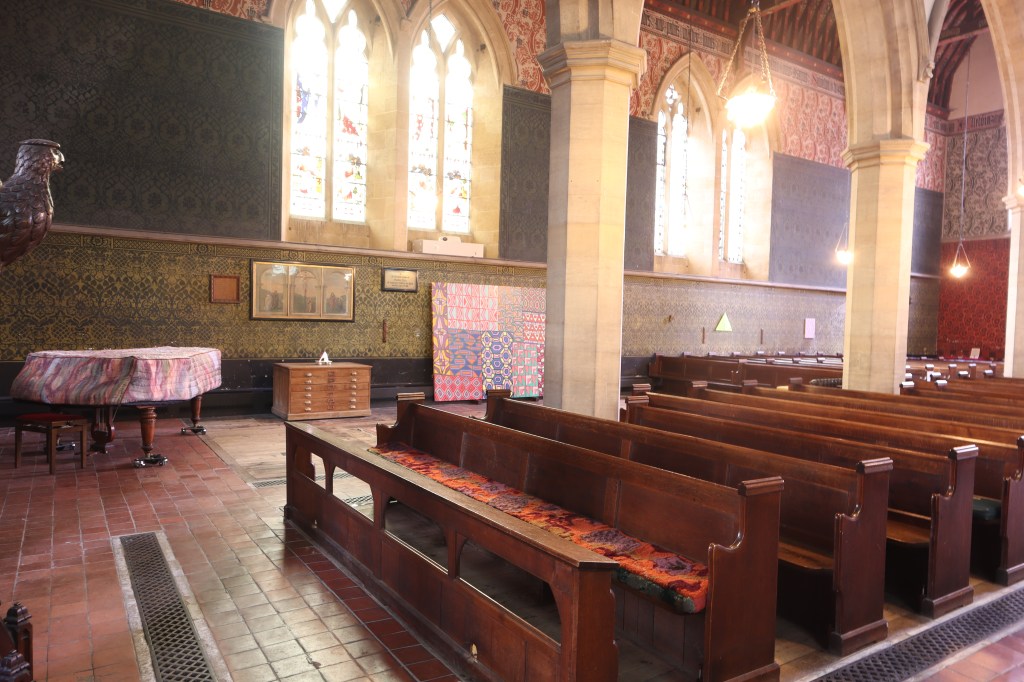
Work pictured from left: Will Cruickshank, Anisa Zahedi, Sophie Giller Painted piano cover, Anisa Zahedi, Sophie Giller Cycle of well-being & Dominic Beattie. Photo by Noah Da Costa.
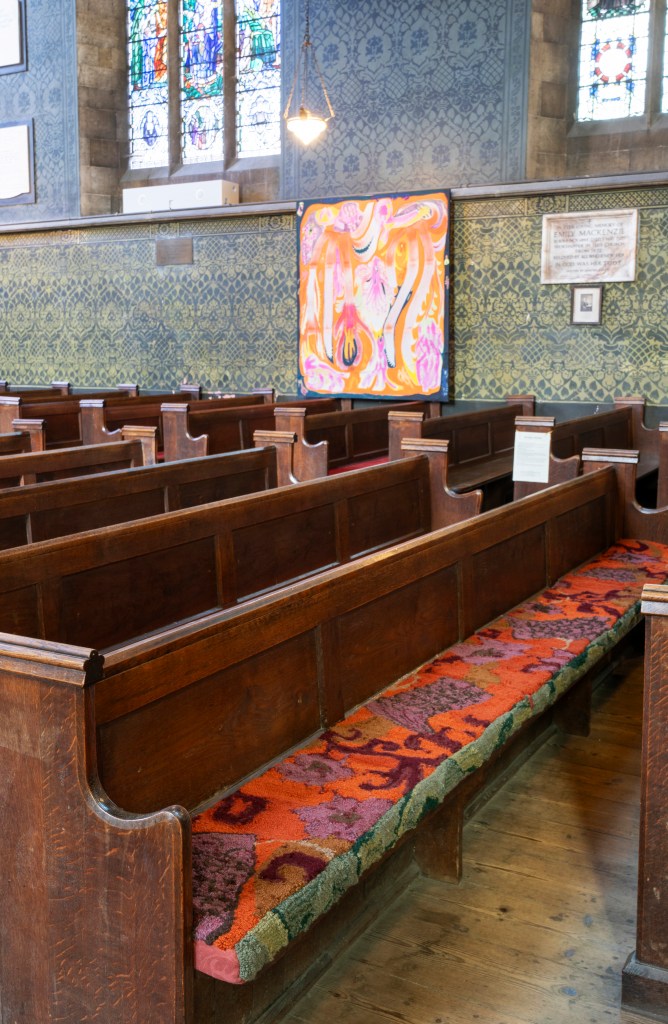
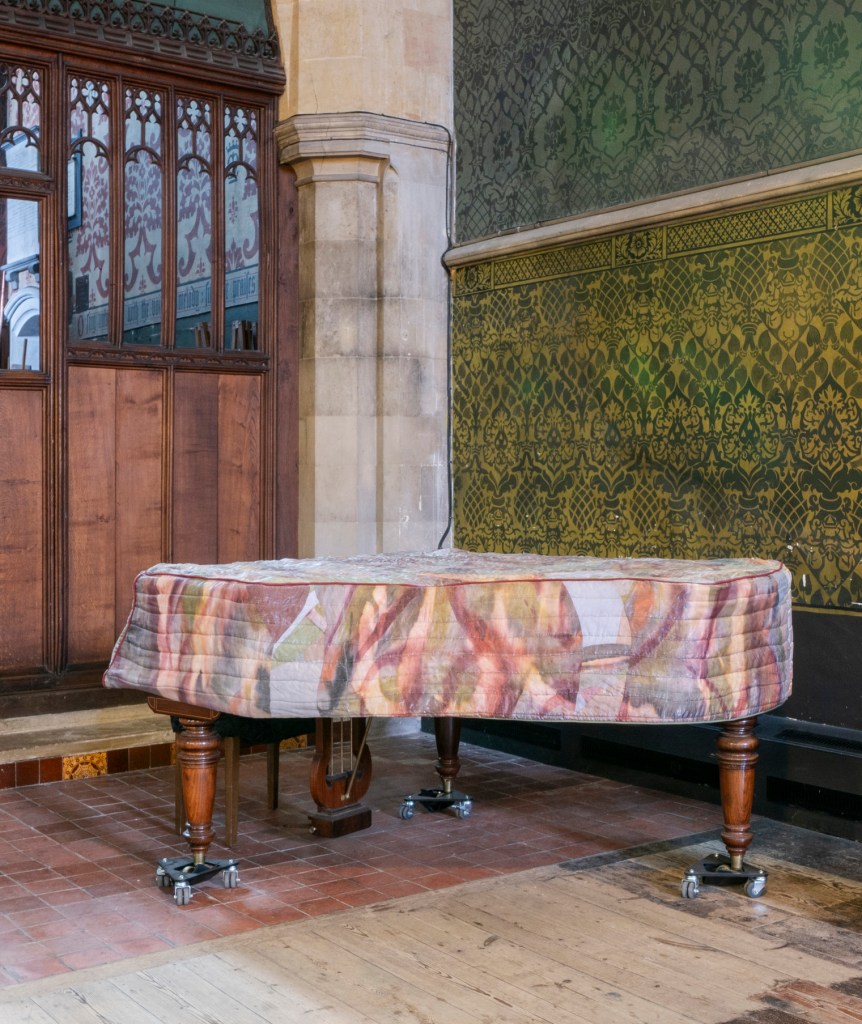
Cycle of well-being pictured behind Melania Toma & Painted piano cover photos by Noah Da Costa
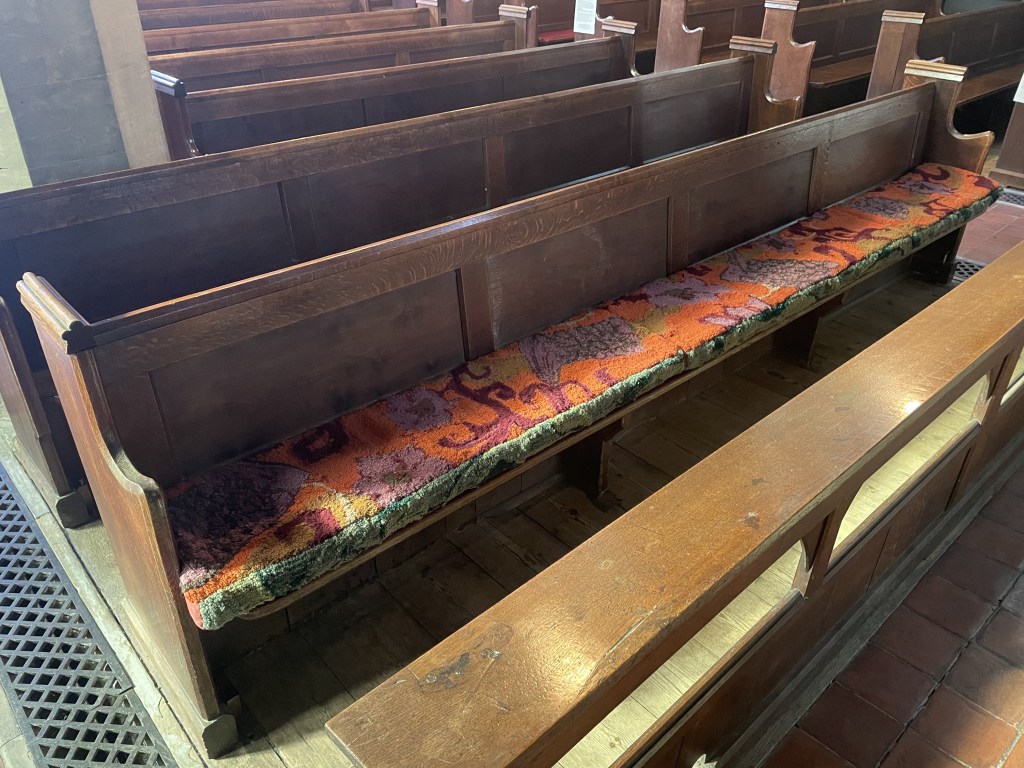
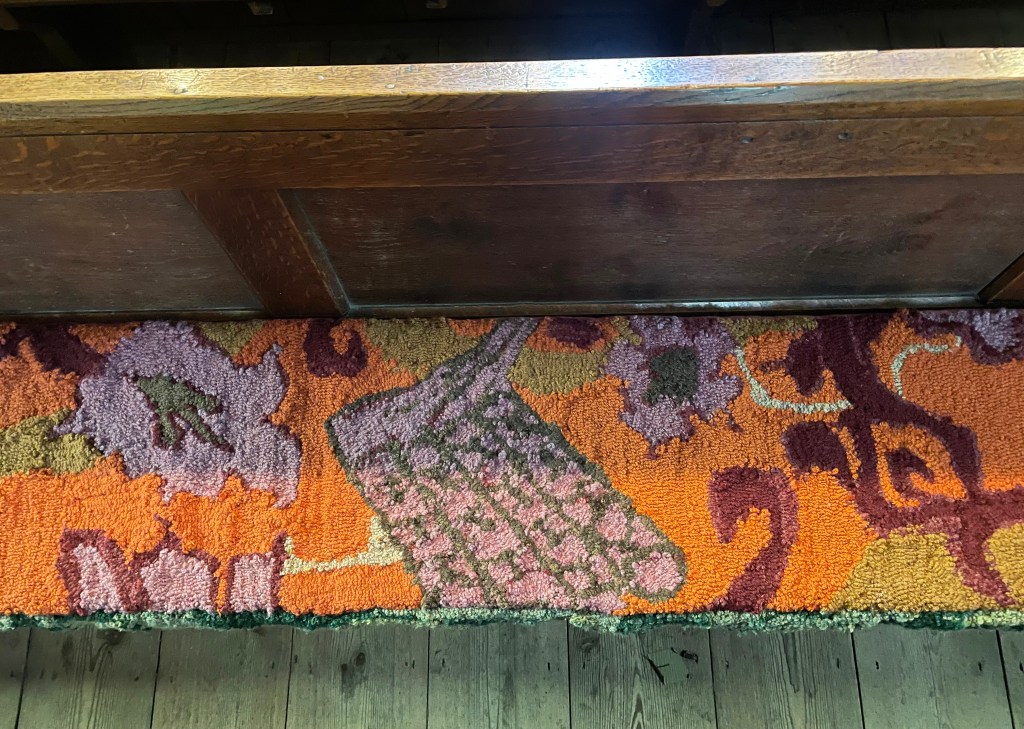
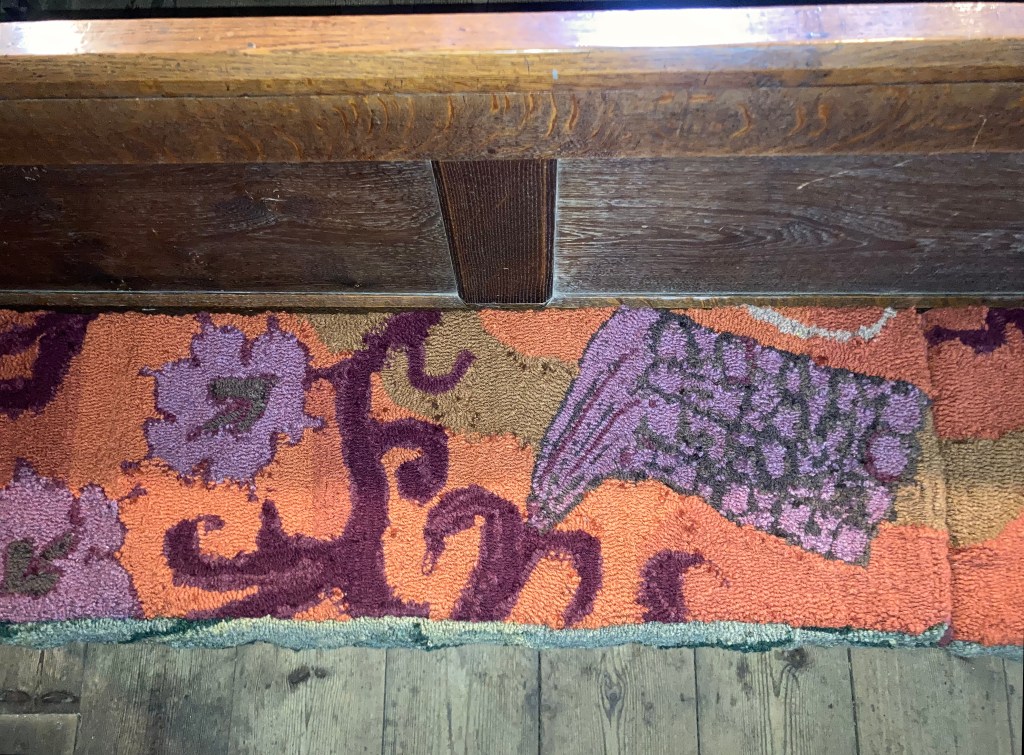
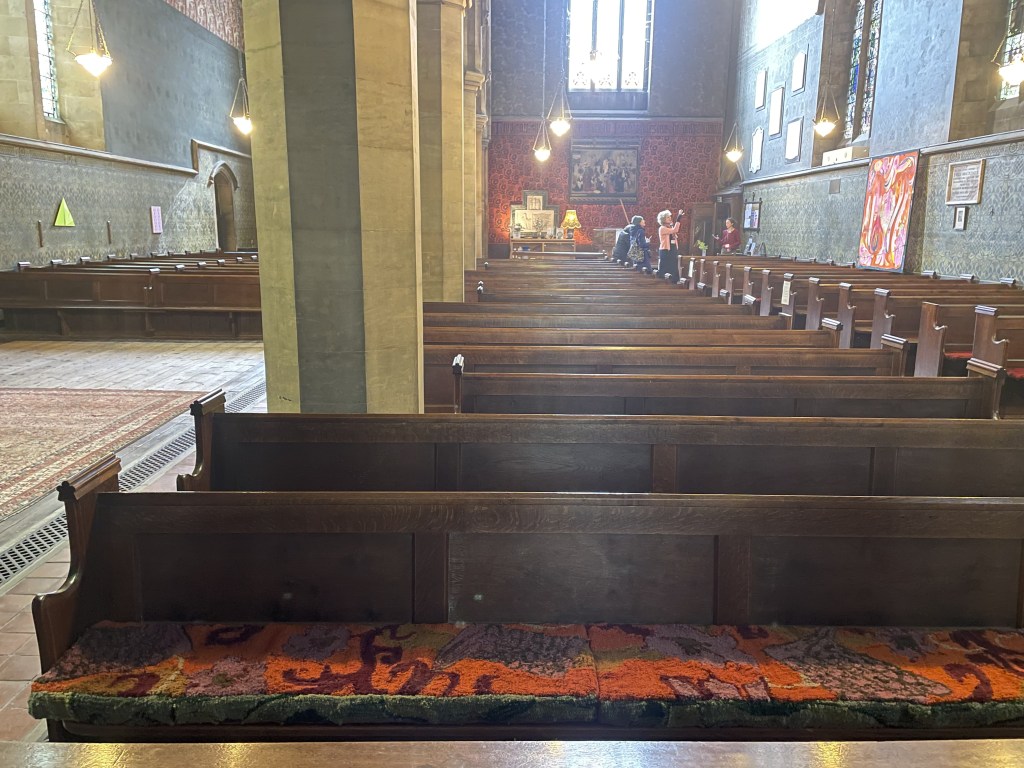
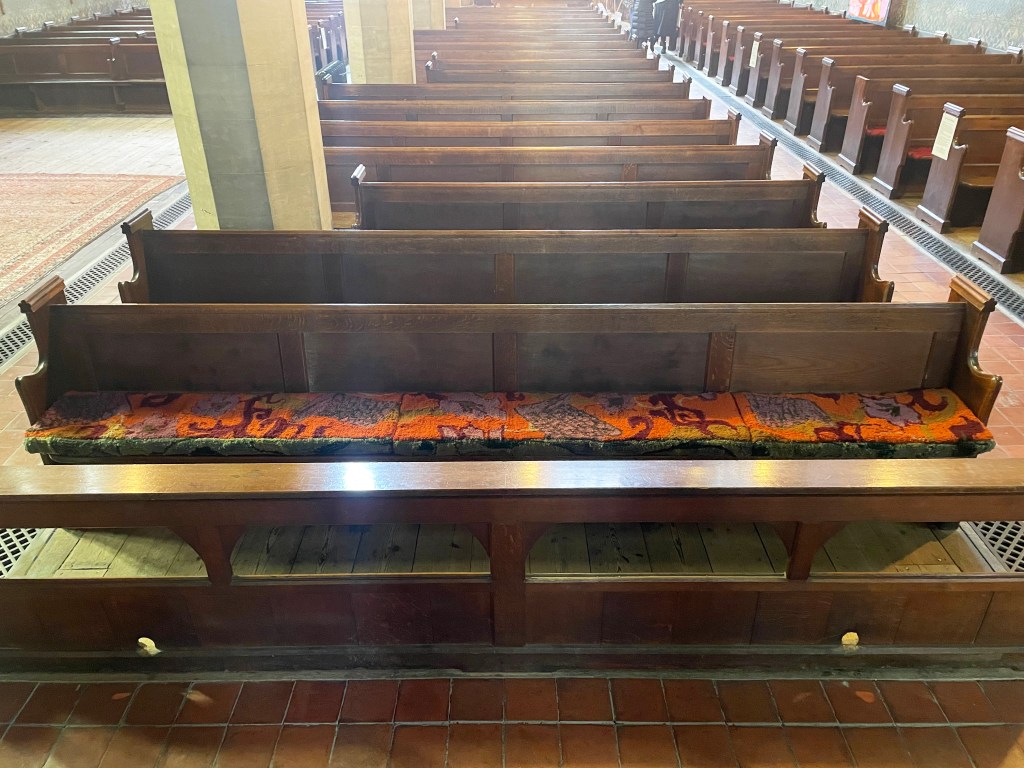
Cycle of well-being, images by the artist, except final photo by Noah Da Costa.
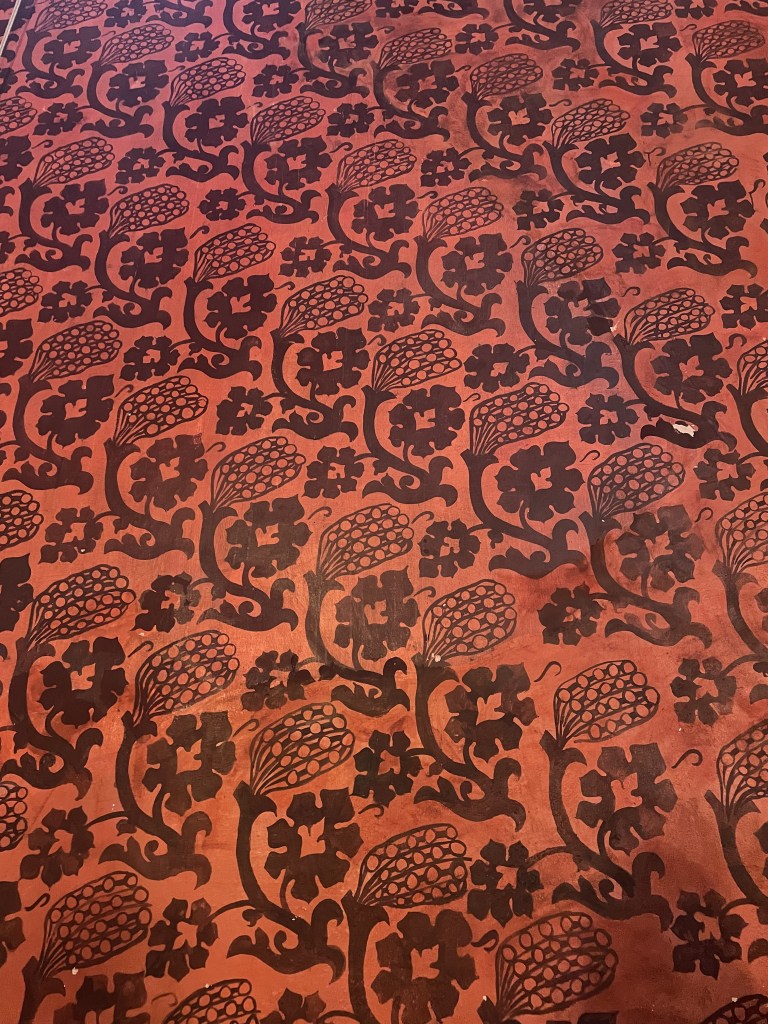
A bit of text on the work by the artist: This 3.3m long (usable!) piece was made in response to the trumpet-like, uneven flower patterns on the hand-painted back wall of the church (see above photo), which was finished in the 1870s and influenced by the Arts & Crafts movement. I wanted to abstract the wall paint into another medium and explore the functionality of seating the hierarchies between the Fine Art and the Arts of Crafts movement.
I also thought about the idea of self-care or self-improvement through time spent sitting in the church. I’m not religious, but I’ve spent time in churches for weddings, funerals, services and concerts and thought about the rows of pews as places for listening, grieving, contemplating & joy. I also had two recent quotes in mind when making this work: Munroe Bergdorf speaks of ‘We’re trying to change ourselves within a atmosphere of chaos’ and Jameela Jamil asked ‘How can anyone feel regulated in such an irregulated society?’ These especially resonated in the last few months of war and injustices we’ve witnessed. Both quotes register the tension between trying to improve yourself individually in a chaotic world and the large power structures that exist outside of you yet still shape your life (even if you didn’t vote for or support them).
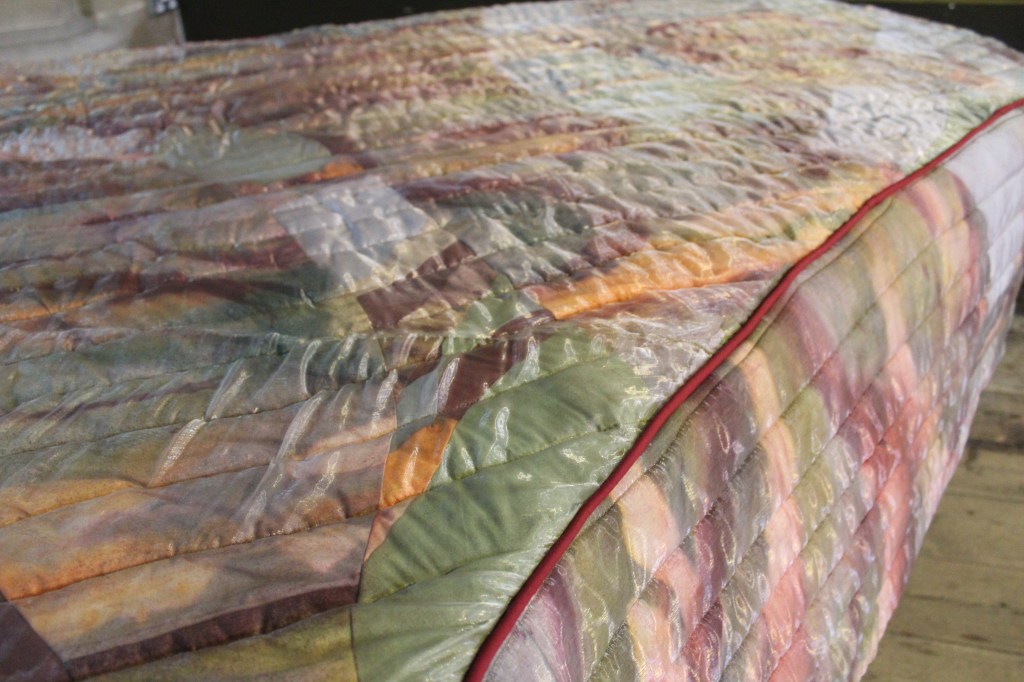
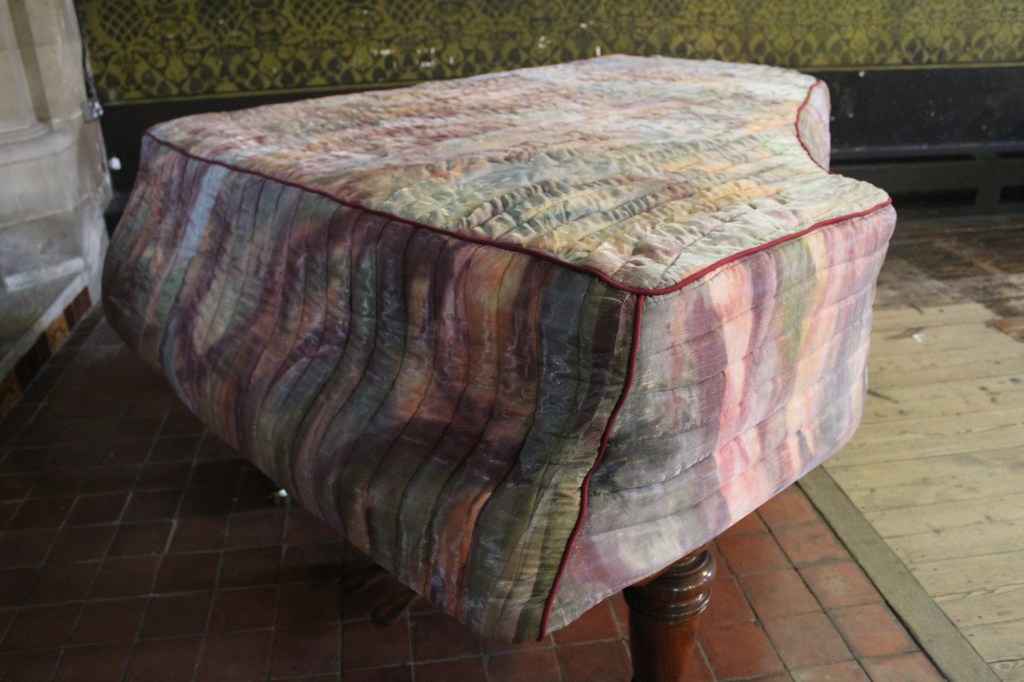
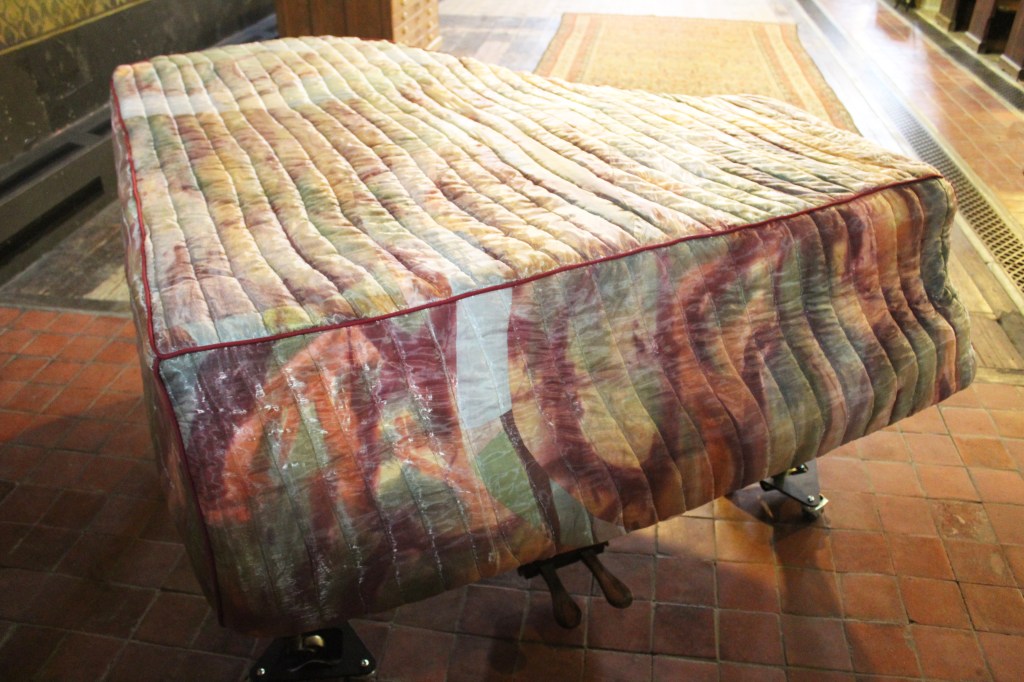
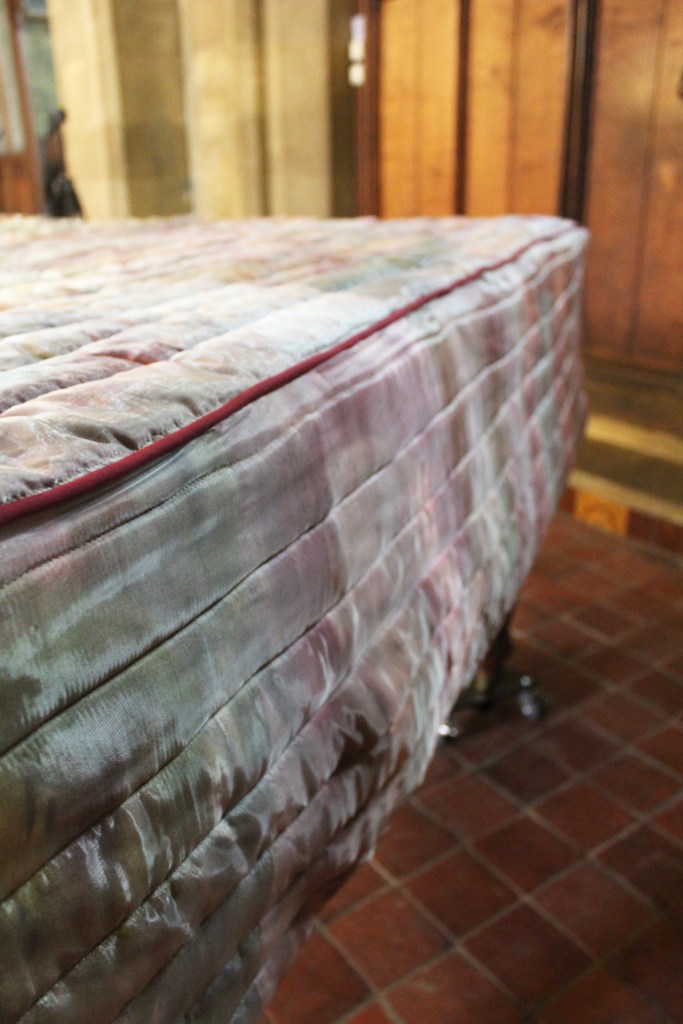
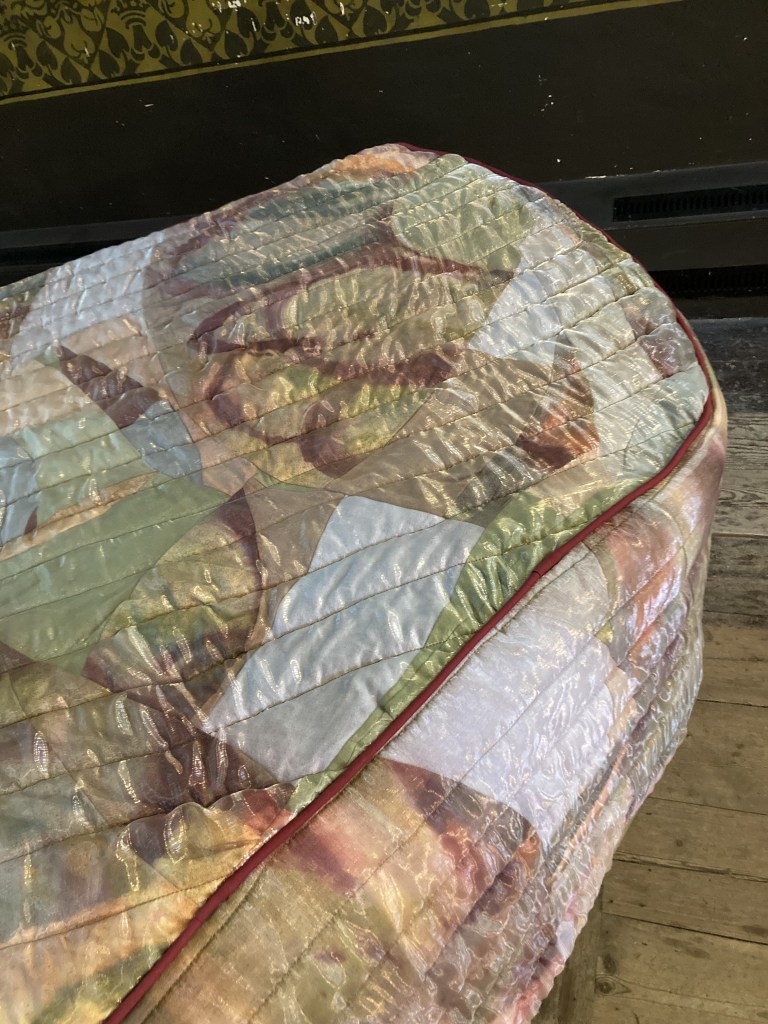
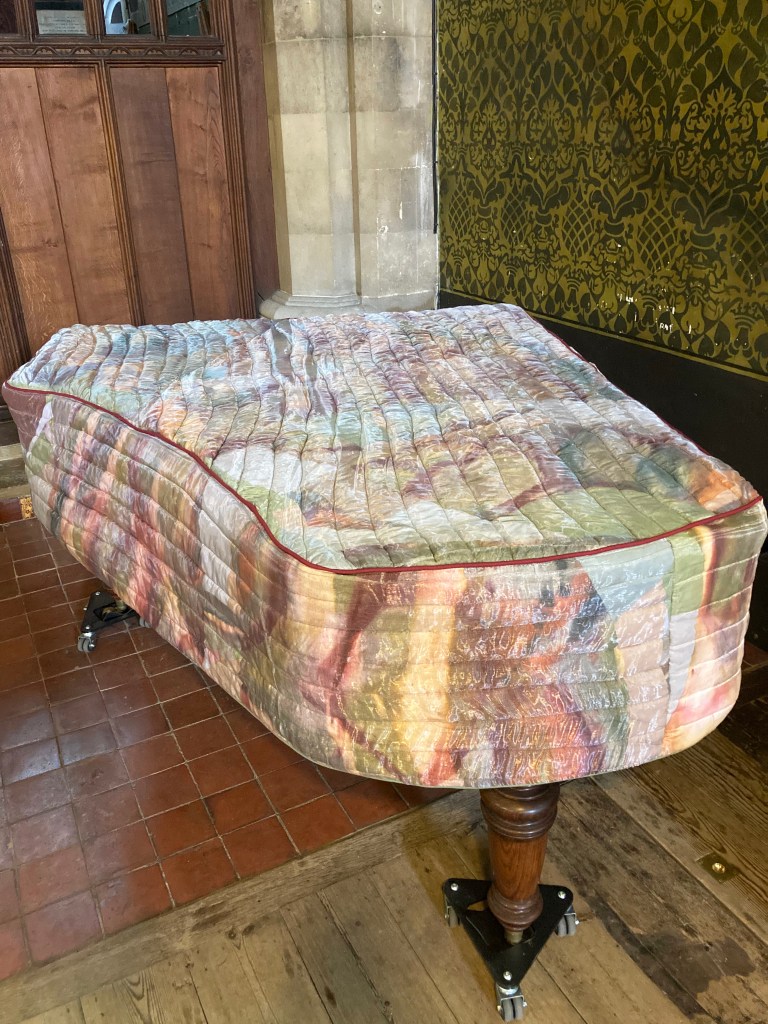
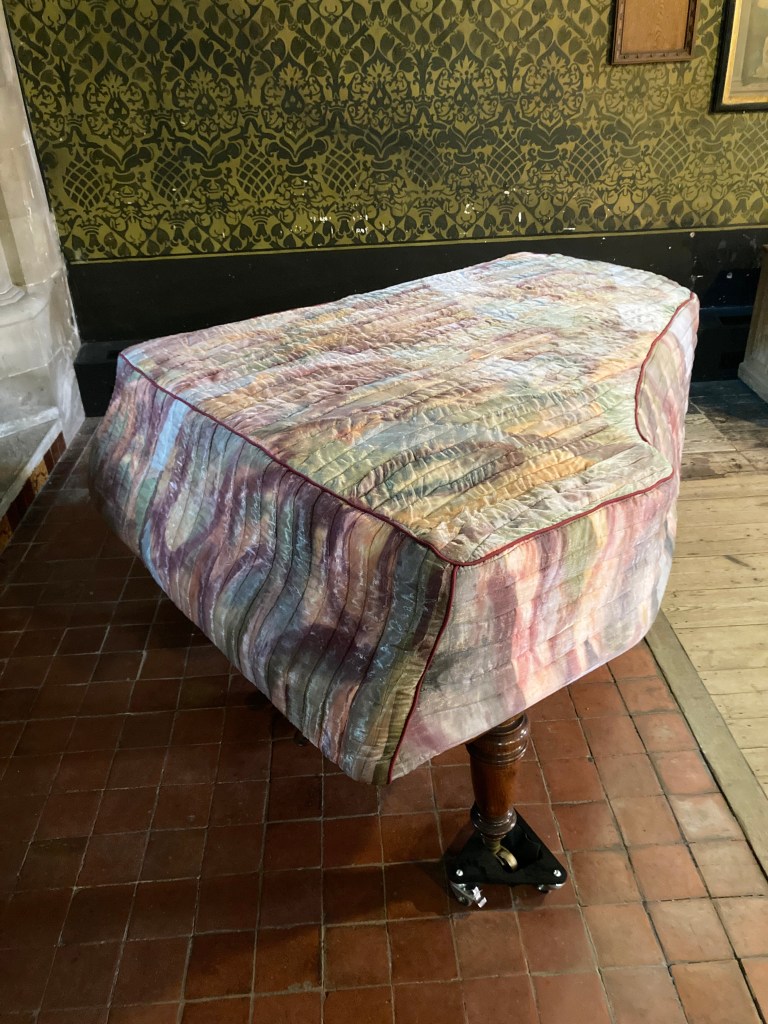
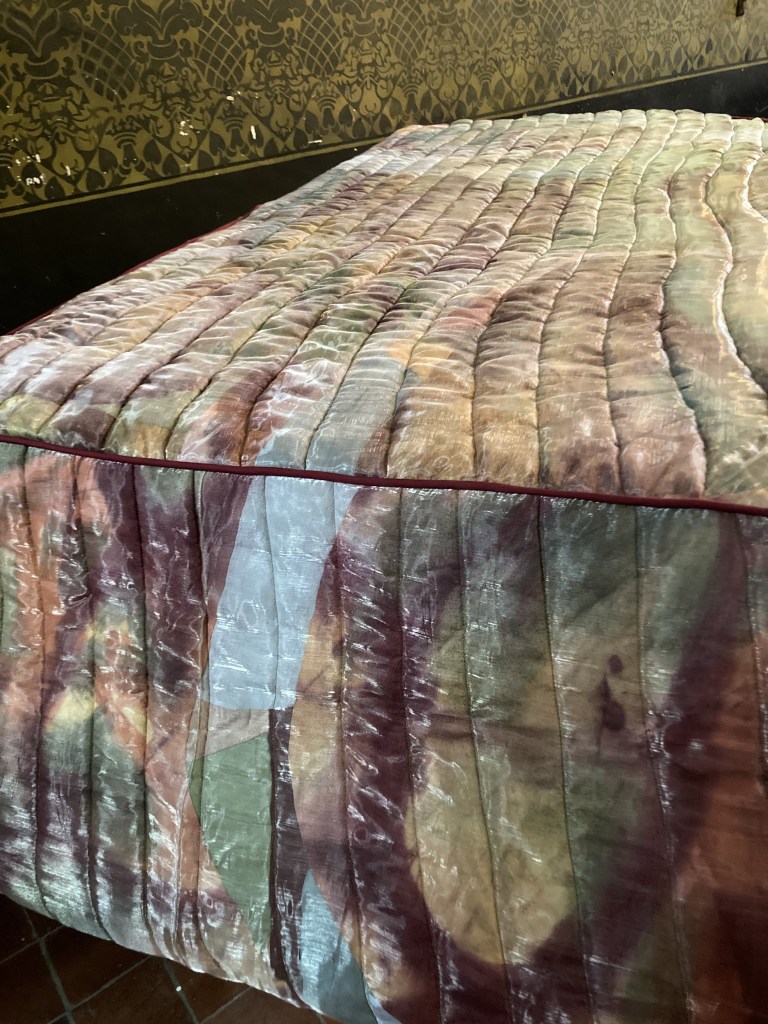
Painted piano cover, images above & text below by the artist:
This piece brings together painting, sculpture, textiles, ‘applied arts’ to furniture, functionality, also inspired by the arts and crafts movement, which influenced the interior of the church.
With this piece I wanted to explore questions like – What happens when we abstract the notion of painting, cut it up, & use it as sculpture?
What happens when we paint with the materials of dyes and linen, traditionally associated with ‘craft’, ‘applied arts’ & ‘feminine labour’?
What happens when we make the sculpture usable and functional?
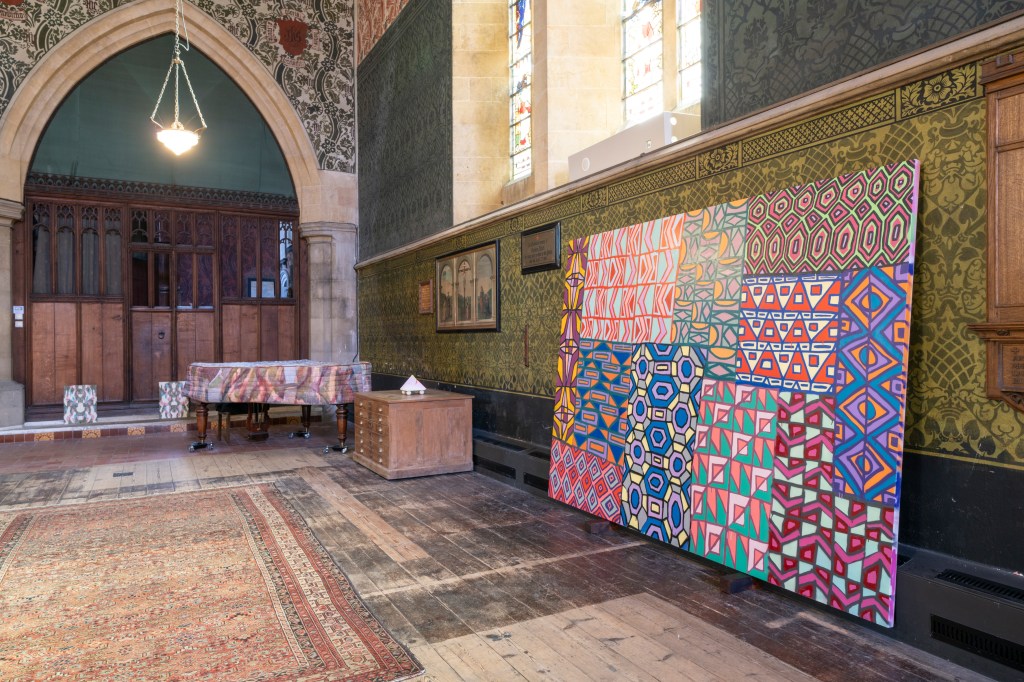
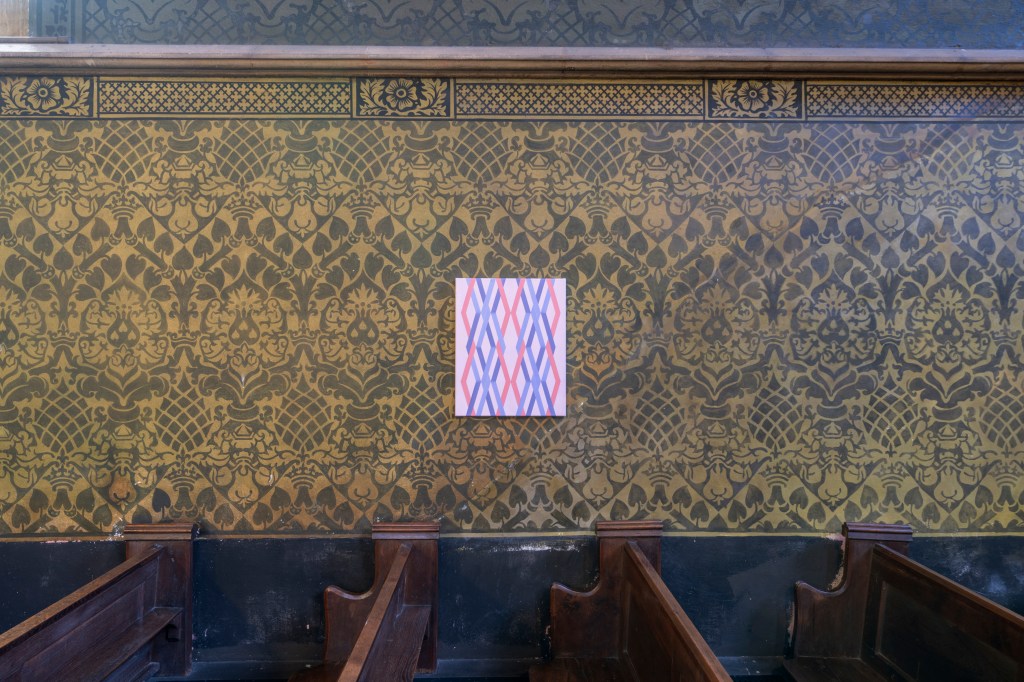
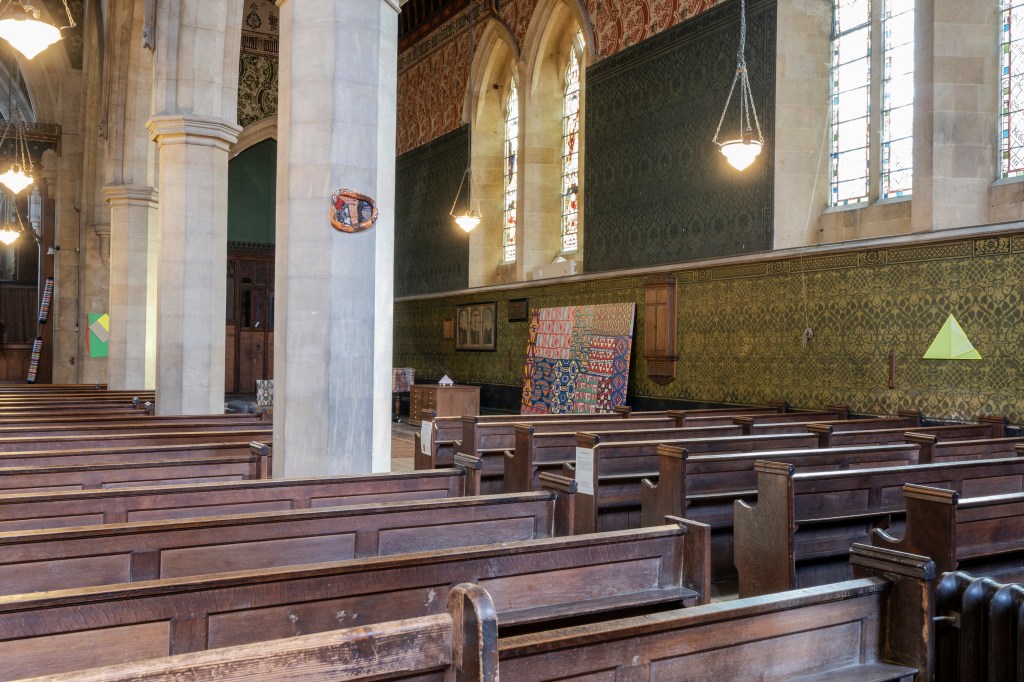
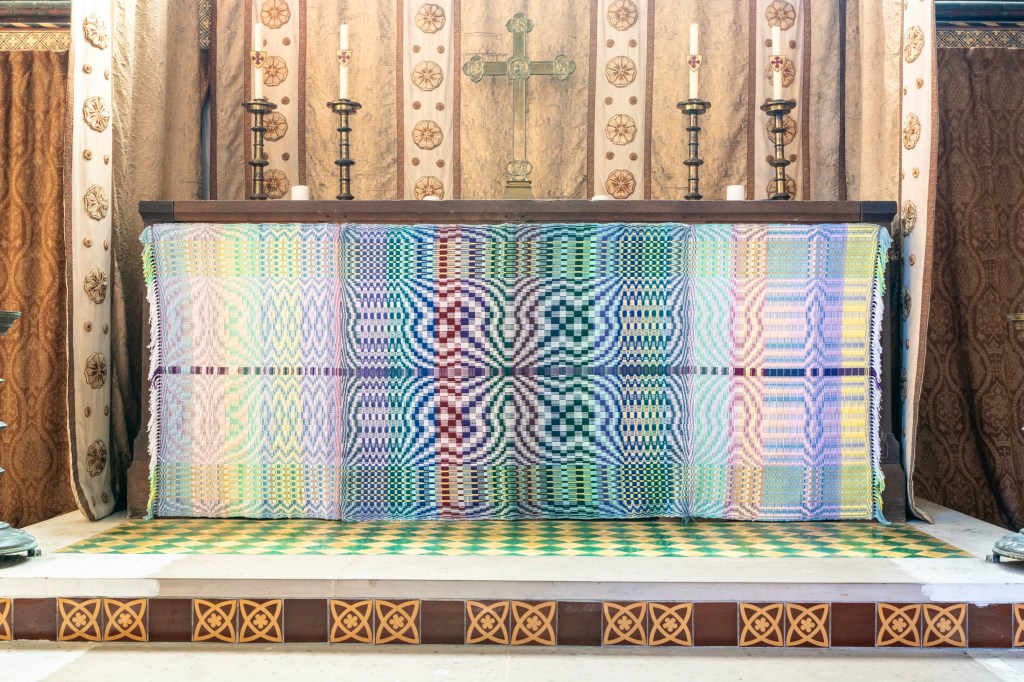
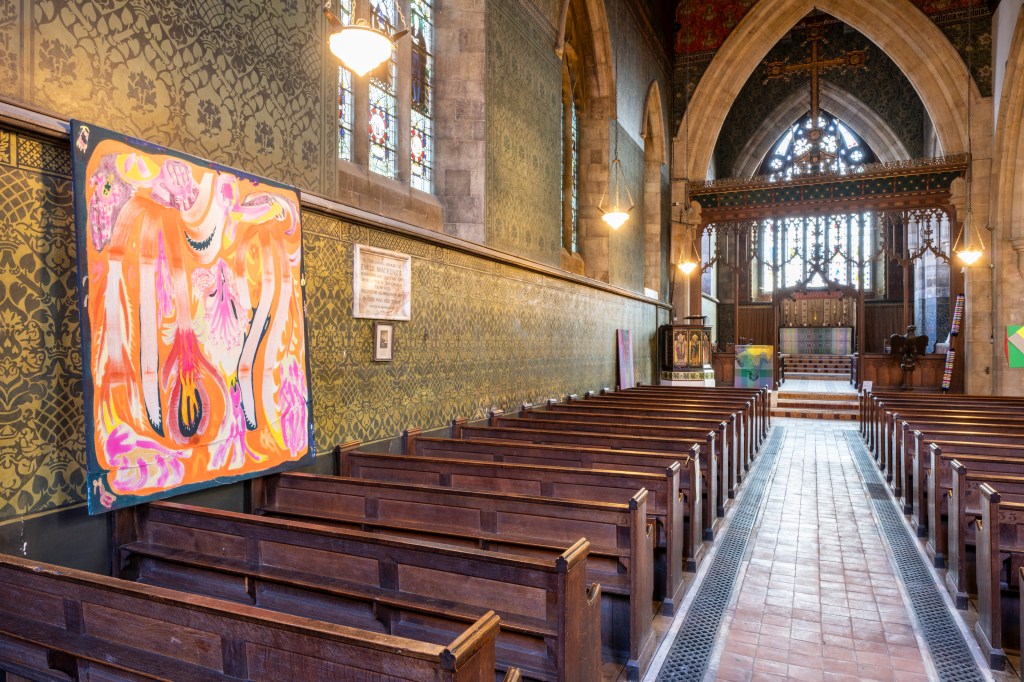
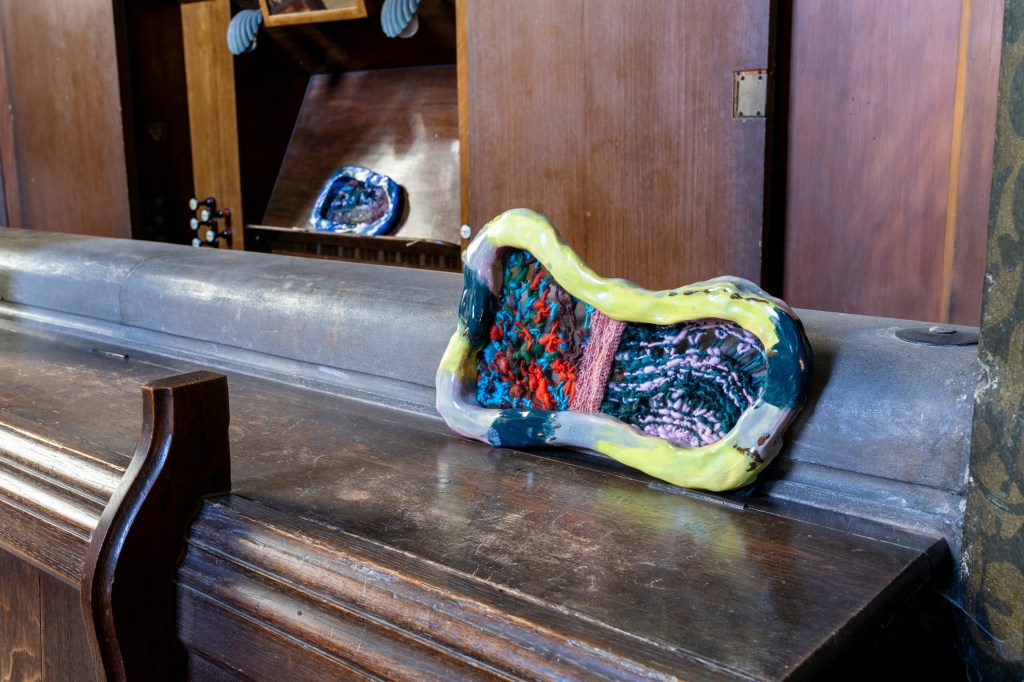
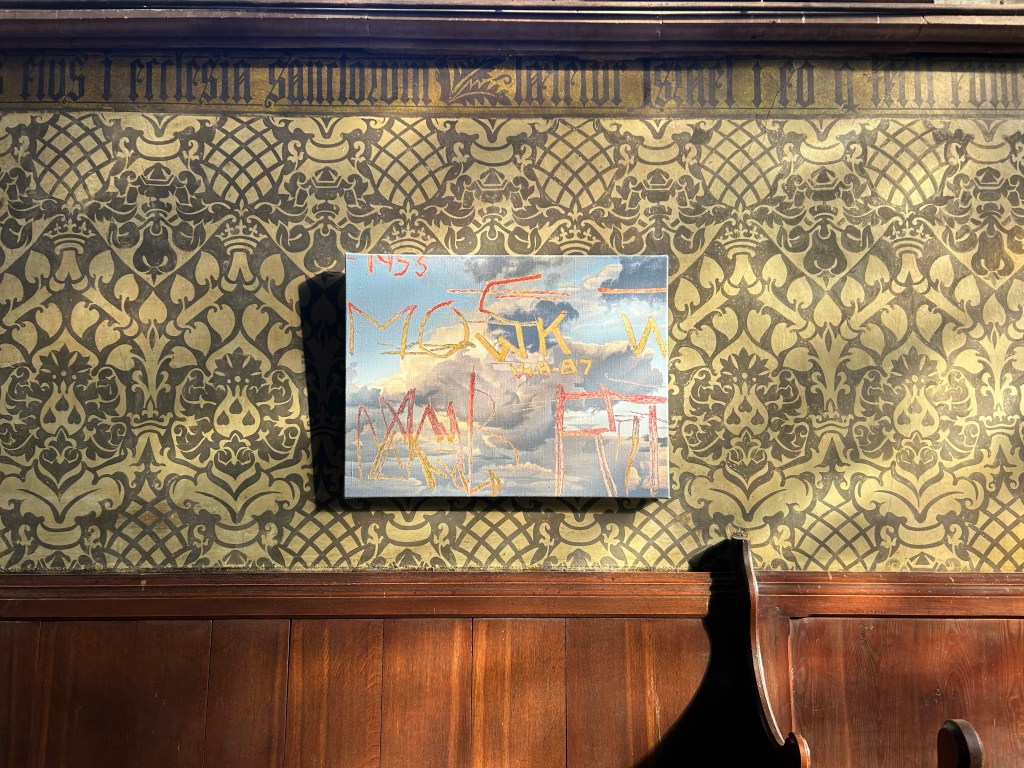
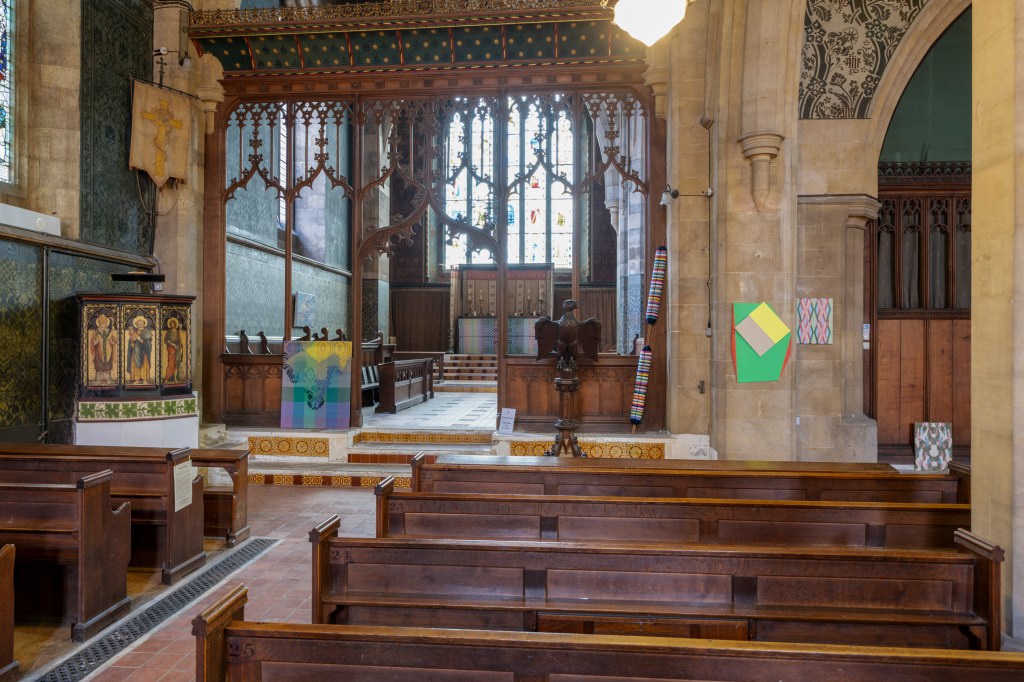
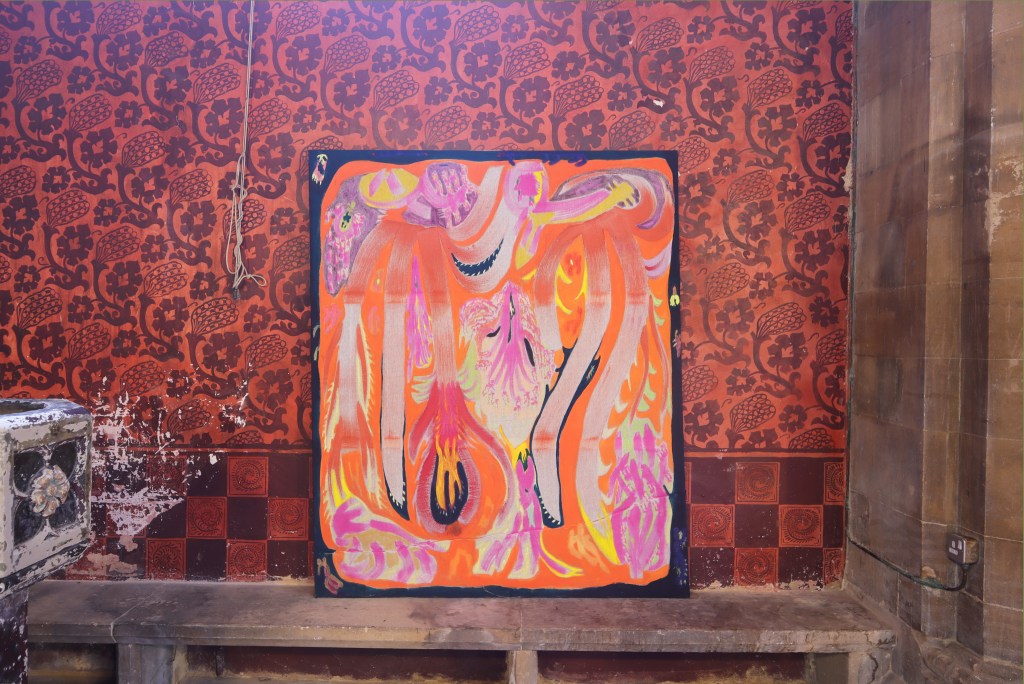
Install shots of the show by Noah Da Costa
Text below by artist Imogen Wetherell:
Revival draws inspiration from the spirit, aesthetic and craftsmanship of All Saints’, affectionately known as Cambridge’s ‘Painted Church’.
In the 1860s, its architect George Frederick Bodley employed fine artists and artisans for the furnishing and decoration of All Saints. Through his instruction, the interior is an eclectic example of applied arts in the Gothic Revival style of the time. Arts and Crafts figures William Morris, Philip Webb and Charles Eamer Kempe designed and fabricated the stained-glass. The church also features a window by Pre Raphaelite artists Edward Burne-Jones and Ford Maddox Brown. Morris and Bodley’s studios oversaw the painted wall decoration with application by F. R Leach & Sons, notably featuring hand painting by local artist David Parr.
Revival references the cyclical nature of art and architecture, as in recent years artists have looked to reinterpret and appropriate traditional craft techniques for contemporary expression. The title also nods to Bodley’s own Gothic Revival vision of medieval ecclesiastical design.
The Revival artists are in a modern re-skilling and handcrafting movement, where the act of making transcends conventional boundaries between applied and fine art.
New works made for the exhibition include paintings by Melania Toma and Imogen Wetherell. A woven frontal by Cecilia Charlton, a tufted pew cushion by Sophie Giller, in a design echoing the red pomegranate wall painting. And a piano quilt also by Giller, a piece that is representative of All Saints’ modern incarnation as a cultural space for concerts.
Art selected include a painting and studies by Ralph Anderson that echo the graffiti carved into the wood of the Church’s organ, speculated to be by the Choir boys. Dominic Beattie’s ‘window paintings’ inspired by stained glass and Will Cruickshank’s pieces that reflect the devotional craftsmanship of the church’s original artists.
The art works in Revival exemplify Bodley’s ethos of artistic variety and individual expression: ‘I can’t say I care greatly for much strictness of rule or rigid uniformity, so long as all is dignified & solemn, &, from an art point of view, beautiful’.
Revival bridges past and present, fostering a kinship with the makers who came before, in celebration of the enduring legacy of Cambridge’s Painted Church.
 Sophie Giller